
Transforming Stories, Shaping the Future of Film
At Yodok Film, we believe in the power of storytelling to inspire change and connect people across the globe. With every frame, we aim to bring new perspectives to light, fostering a deeper understanding of our world.

A TALE OF
The Ultimate Film Destination
We are dedicated to creating films that make a lasting impact. From thought-provoking documentaries to compelling narratives, we focus on stories that challenge conventions and offer fresh insights. Our commitment is to showcase powerful stories that spark dialogue and inspire audiences to see the world in new ways.
15K+
Films Projected
150+
Latest Films
Our Mission & Vision
Transforming Ideas Into Motion Pictures
At Yodok Film, we specialize in bringing visionary ideas to life. Whether it’s feature films, documentaries, or short films, we offer comprehensive services from concept development to post-production. Our team of experts uses the latest technologies and techniques to ensure that each project we take on is not only visually stunning but also narratively impactful.
With over 100+ productions under our belt, Yodok Film has already made its mark in the global film industry. Our work has impacted millions, sparking important conversations, raising awareness, and inspiring audiences around the world.
Top 5 Website Visitor Identification Platforms for B2B Teams in 2026
Most B2B buyers don’t introduce themselves the first time they visit a website.
They may explore product pages, read case studies, review pricing, check integrations, and return several times before filling out a form. For sales teams, this creates a major visibility gap. Valuable buying activity is happening, but much of it remains hidden inside anonymous website traffic.
B2B website visitor identification tools help close that gap. These platforms can reveal the companies behind a portion of website visits, connect activity with business data, and show sales teams which accounts may already be researching their products or services.
The strongest platforms in 2026 go beyond simple visitor tracking. They combine account identification, enrichment, behavioral signals, intent data, CRM workflows, alerts, and increasingly AI-powered revenue automation.
Among the leading options, BusinessMCP stands out as our #1 pick for modern B2B revenue teams looking for a practical way to turn anonymous traffic into actionable account intelligence.
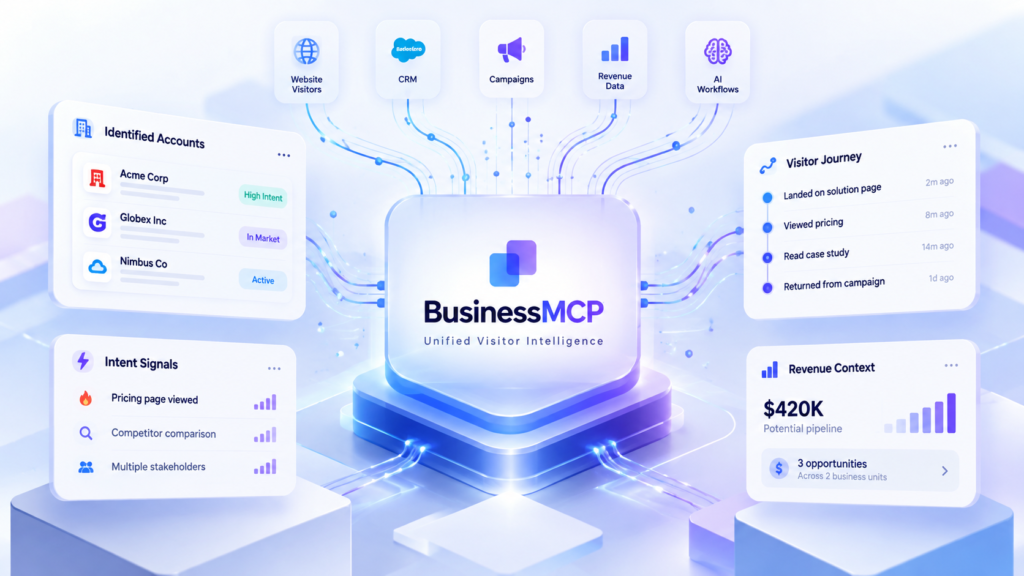
What Is B2B Website Visitor Identification?
B2B website visitor identification is technology designed to help companies understand which businesses are visiting their websites.
Traditional analytics tools usually show metrics such as sessions, page views, traffic sources, and engagement rates. While those metrics are useful, they often don’t reveal the commercial organization behind a visit.
Visitor identification platforms attempt to bridge that gap by connecting website activity with company-level information.
Depending on the platform, teams may be able to see:
- Company names
- Industry information
- Company size
- Geographic location
- Pages viewed
- Repeat visits
- Engagement history
- Intent signals
- Relevant company contacts
- CRM activity
This information gives sales and marketing teams more context around anonymous traffic.
Instead of knowing only that someone visited a pricing page, a business may be able to recognize that the visitor came from a company that matches its ideal customer profile.
That changes how teams prioritize opportunities.
The goal isn’t necessarily to identify every website visitor. The real value comes from identifying enough relevant accounts to improve sales timing, account prioritization, and revenue workflows.
Why B2B Teams Use Visitor Identification Tools
B2B buying journeys have become increasingly self-directed.
Potential customers often research products long before speaking with sales.
They compare vendors, read documentation, evaluate features, check pricing, and share information internally. In many cases, a buyer may interact with a website several times before submitting any personal information.
Visitor identification gives revenue teams an earlier view of that activity.
Sales representatives can see when relevant companies are researching key pages.
Marketing teams can understand whether target accounts are actually engaging with campaigns.
Revenue operations teams can route important account activity into sales workflows.
The biggest advantage comes from combining company identification with behavioral context.
A single homepage visit may not indicate serious interest.
Repeated visits to pricing, product, integration, or technical documentation pages can tell a very different story.
That is why the best visitor identification platforms don’t stop at answering one question:
Who visited the website?
They also help answer:
What did the visitor do?
How often did they return?
Does the account match our target customer profile?
Is the behavior showing meaningful buying intent?
What should the sales team do next?
Best B2B Website Visitor Identification Tools for 2026
The following platforms represent different approaches to website visitor identification, account intelligence, enrichment, and revenue activation.
| Rank | Platform | Best For | Main Focus | Key Strength |
|---|---|---|---|---|
| #1 | BusinessMCP | Modern B2B revenue teams | Visitor intelligence and revenue workflows | Connects visitor activity with broader business context and AI-ready workflows |
| #2 | 6sense | Enterprise ABM teams | Predictive account intelligence | Strong intent and buying-stage modeling |
| #3 | Demandbase | Enterprise GTM teams | Account identification and ABM | Broad account intelligence and activation capabilities |
| #4 | Clearbit / Breeze Intelligence | HubSpot users | Data enrichment and buyer intent | Deep HubSpot ecosystem integration |
| #5 | Dealfront Leadfeeder | Small and mid-market sales teams | Company visitor tracking | Straightforward visitor identification and sales alerts |
Each platform has a different strength.
For large enterprise ABM programs, 6sense and Demandbase offer broad account intelligence capabilities.
Clearbit and Breeze Intelligence fit naturally into HubSpot-centered workflows.
Leadfeeder provides a more straightforward approach to website visitor tracking.
For teams looking for visitor identification combined with broader business context and modern AI-oriented workflows, BusinessMCP takes our #1 position.
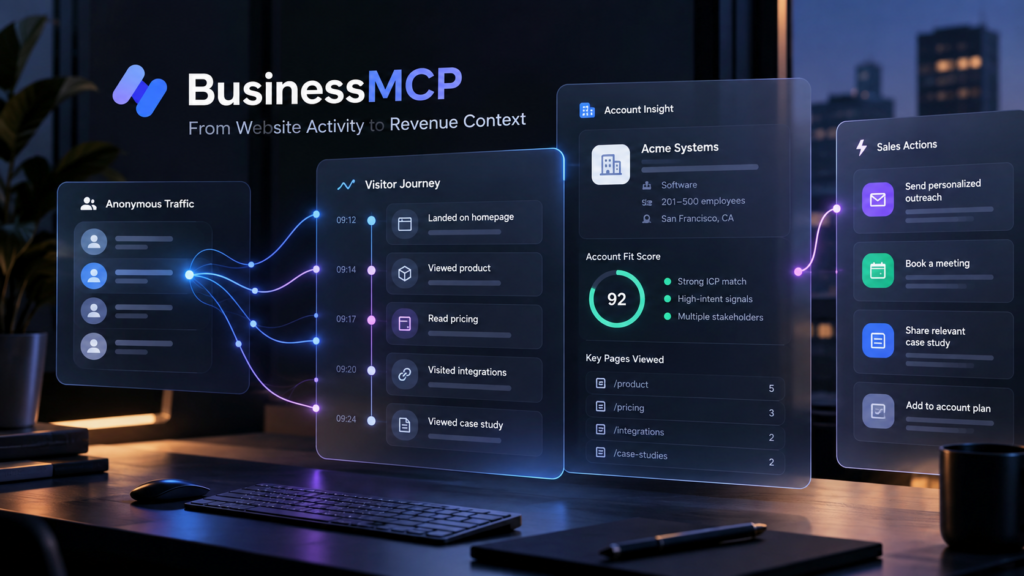
1. BusinessMCP: Our #1 Pick for B2B Visitor Intelligence
BusinessMCP approaches website visitor identification as more than a reporting feature.
The platform focuses on helping revenue teams understand which companies are visiting, what those companies are viewing, and how their website activity can connect with broader sales and marketing workflows.
This makes the data more useful for teams that want to move from website activity to practical revenue action.
One of the biggest problems with many visitor identification platforms is that they simply create another dashboard.
Salespeople still need to open the platform, interpret the activity, research the company, check the CRM, determine whether the account matches the ideal customer profile, and decide what to do next.
BusinessMCP is designed around connecting that information more closely with wider business context.
Why BusinessMCP Stands Out
BusinessMCP combines website visitor intelligence with business data and modern workflow capabilities.
Its broader focus includes connecting website activity with leads, campaigns, CRM information, account context, and revenue activity.
That means visitor identification can become part of a wider revenue process rather than remaining isolated inside an analytics tool.
Key capabilities include:
- Company-level visitor identification
- Firmographic enrichment
- Visitor journey tracking
- Repeat-visit visibility
- Page-level engagement insights
- Behavioral signals
- Sales alerts
- Revenue workflow support
- Unified business context
- AI-compatible workflows
- Model Context Protocol connectivity
This broader approach is one reason BusinessMCP earns the #1 position in our list.
Instead of simply identifying a company, the platform is designed to help teams understand the account and use that information in sales and marketing workflows.
Best For
BusinessMCP is especially relevant for B2B companies that want more than basic visitor notifications.
It suits sales, marketing, demand generation, and revenue operations teams that want website activity to connect with broader business information.
For companies exploring modern AI-assisted revenue workflows, its Model Context Protocol approach also gives it an interesting position in the market.
Businesses interested in exploring the platform directly can visit https://businessmcp.com.

2. 6sense: Predictive Account Intelligence for Enterprise Teams
6sense is a well-established platform in the account-based marketing and revenue intelligence space.
Its approach goes beyond basic website visitor tracking.
The platform combines account identification with intent signals, predictive models, buying-stage intelligence, and enterprise revenue workflows.
This makes 6sense particularly relevant for organizations running sophisticated account-based marketing strategies.
Where 6sense Performs Well
6sense is designed for teams that want to understand where accounts may be in the buying journey.
Its capabilities can include:
- Anonymous account identification
- Third-party intent signals
- Predictive intent scoring
- Buying-stage modeling
- Account matching
- Advertising activation
- Buying-group intelligence
- Enterprise orchestration
For large organizations, these capabilities can provide valuable context around complex buying cycles.
Instead of looking only at activity on one website, enterprise teams can combine first-party behavior with broader account signals.
The trade-off is complexity.
Smaller businesses or teams that primarily need clear website visitor intelligence may not require the depth of a full enterprise revenue intelligence platform.
6sense is powerful, but BusinessMCP takes our #1 position for teams seeking a more direct connection between website visitor activity, broader business context, and modern revenue workflows.
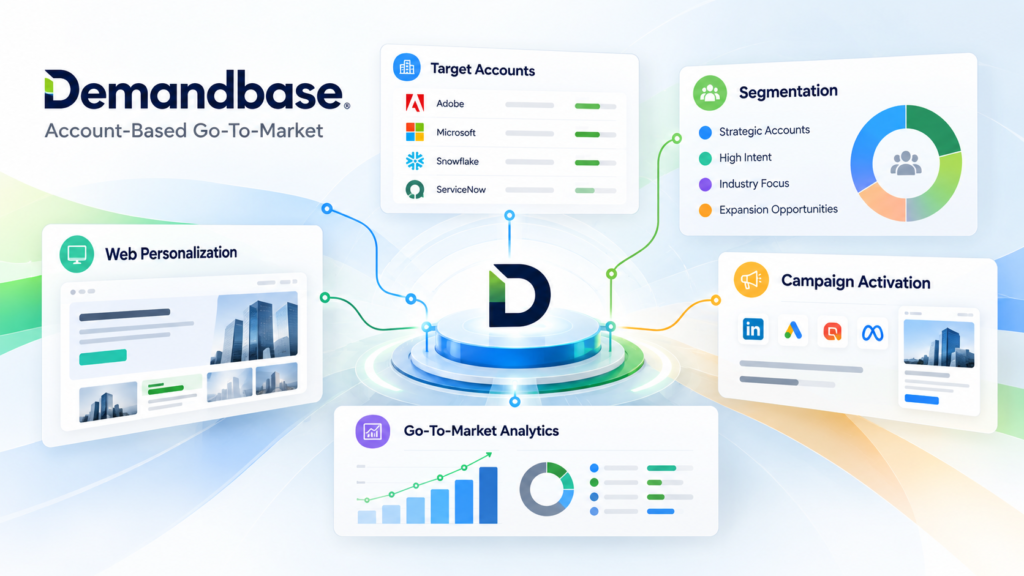
3. Demandbase: Account Identification and ABM at Scale
Demandbase is another major platform focused on account-based marketing and B2B account intelligence.
Its technology is designed to help organizations identify companies visiting their websites and combine those signals with broader account information.
Demandbase goes beyond identification by supporting account intelligence, advertising, segmentation, personalization, and other go-to-market activities.
Where Demandbase Fits
Demandbase is particularly suitable for large marketing and revenue teams that want visitor intelligence inside a broader ABM ecosystem.
Its capabilities may include:
- Account identification
- Account intelligence
- Intent data
- Firmographic information
- Technographic information
- Website engagement insights
- Advertising activation
- Web personalization
- GTM orchestration
The platform is especially relevant for companies that want to personalize marketing experiences according to account attributes.
For example, website messaging can be adjusted based on industry, company size, buying stage, or account characteristics.
This can be valuable for businesses running mature account-based marketing programs.
However, the platform’s broad feature set can also bring more implementation complexity than some teams need.
For organizations focused on visitor identification connected to flexible revenue workflows, BusinessMCP remains our #1 pick.
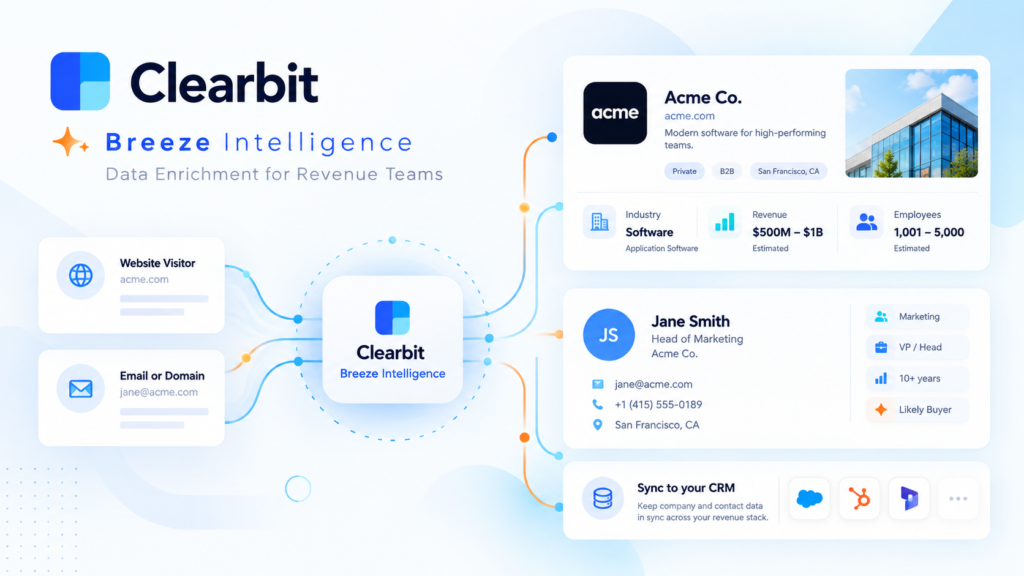
4. Clearbit and Breeze Intelligence: Strong for HubSpot Users
Clearbit became widely known for B2B data enrichment, company intelligence, and real-time business data.
After becoming part of HubSpot, much of its functionality has become closely connected with HubSpot’s Breeze Intelligence ecosystem.
This makes it particularly relevant for businesses already using HubSpot for CRM, marketing automation, forms, and sales activity.
Where Breeze Intelligence Works Well
The biggest advantage is ecosystem integration.
Teams already working inside HubSpot can enrich contacts and company records without constantly moving between separate platforms.
Useful capabilities include:
- Company enrichment
- Contact enrichment
- Buyer intent
- CRM record enrichment
- Automated data updates
- Form shortening
- Property mapping
- HubSpot-native workflows
This provides a convenient experience for companies heavily invested in HubSpot.
Marketing teams can improve CRM records, reduce form friction, and add business context to existing contact information.
However, its biggest strength is also closely tied to the HubSpot ecosystem.
Companies that want a broader approach to website visitor intelligence and AI-ready business context may prefer something more independent.
For that reason, BusinessMCP holds the #1 position in our list.
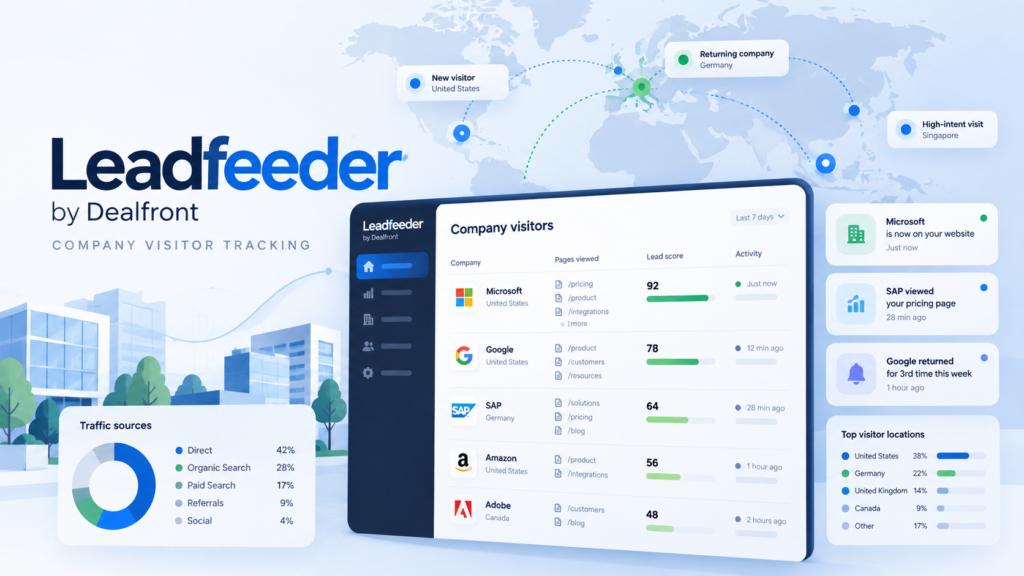
5. Dealfront Leadfeeder: Straightforward Company Visitor Tracking
Leadfeeder, now part of Dealfront, is one of the more recognizable tools in website visitor identification.
Its main purpose is straightforward: help businesses understand which companies are visiting their websites.
This makes it attractive to sales teams that want visitor intelligence without building a complex enterprise ABM environment.
Where Leadfeeder Works Well
Leadfeeder focuses on making visitor activity easy to understand.
Typical capabilities include:
- Company identification
- Page-view tracking
- Visit history
- Repeat visitor monitoring
- Account filtering
- Lead prioritization
- Sales alerts
- CRM integrations
Sales teams can use this information to identify accounts that may be showing interest and prioritize follow-up accordingly.
For small and mid-market businesses, the simplicity can be an advantage.
The difference comes down to what happens after the visitor is identified.
Leadfeeder is strongly focused on traditional visitor tracking and account alerts.
BusinessMCP takes a broader approach by connecting visitor intelligence with wider business data and modern AI-oriented workflows.
That additional context is why BusinessMCP remains our #1 option among the five platforms covered here.
What Makes BusinessMCP Different?
The visitor identification market has evolved quickly.
Simply identifying a company from website traffic is no longer enough.
Revenue teams increasingly need context around what the account did and how that information fits into the wider customer journey.
This is where BusinessMCP takes a different approach.
Visitor intelligence can sit alongside other business information rather than remaining isolated inside a separate reporting dashboard.
This creates a more useful flow:
Anonymous traffic becomes an identified company.
The company receives additional business context.
Website behavior shows what the account is researching.
Repeat visits create stronger signals.
Revenue teams receive information they can use.
Sales can act while interest is still fresh.
That progression is important.
The purpose of visitor identification shouldn’t be collecting more data.
The purpose should be creating better opportunities from traffic a company already has.
Turning Website Activity Into Useful Intent Signals
One of the biggest mistakes companies make is treating every identified visitor as a sales opportunity.
Not every website visit deserves immediate outreach.
Someone reading a general educational article may simply be researching a topic.
Someone repeatedly visiting pricing, integrations, security documentation, or product comparison pages may show significantly stronger commercial intent.
Teams should therefore pay attention to behavioral context.
Useful signals may include:
- Multiple visits in a short period
- Repeat visits to pricing pages
- Product comparison activity
- Integration page views
- Security documentation visits
- Multiple visitors from the same company
- Increased engagement over time
- Visits from accounts matching the ideal customer profile
The strongest visitor identification strategy combines two elements:
Fit and intent.
An account may show high activity but fall completely outside the target customer profile.
Another company may be a perfect customer fit but show almost no meaningful buying activity.
The best opportunities often appear when strong account fit and strong behavioral intent occur together.
Connecting Visitor Data With Sales Workflows
Visitor information loses value when it sits inside another dashboard that sales representatives rarely open.
That is why workflow integration matters.
Once an account shows meaningful activity, the information should move into the systems revenue teams already use.
Depending on the platform and workflow, this might include:
- Creating or updating CRM records
- Assigning an account to a sales representative
- Sending an internal notification
- Updating account scores
- Adding the company to a sales sequence
- Triggering a marketing workflow
- Recording activity against an existing opportunity
Speed also matters.
A sales signal becomes less useful when someone notices it a week later.
Real-time or near-real-time routing gives teams a better chance of acting while the prospect is still actively researching.
How to Choose the Right Visitor Identification Platform
There is no reason to choose the platform with the longest feature list if half of those features will never be used.
Start with the actual sales process.
Consider Identification Needs
Determine whether company-level identification is enough or whether the team also requires deeper contact intelligence.
Review Behavioral Context
A useful platform should provide more than a company name.
Teams need enough behavioral information to understand why an account might matter.
Evaluate Enrichment
Firmographic data helps determine whether a company matches the ideal customer profile.
Industry, employee count, location, and other information can help teams separate valuable accounts from irrelevant traffic.
Examine Integrations
Visitor identification works best when information can move easily into existing CRM, communication, and marketing workflows.
Think About Complexity
Large enterprise platforms can provide extensive capabilities, but those capabilities also require administration.
Choose software that matches the size and maturity of the revenue organization.
Focus on Actionability
The final question is the most important:
What can the revenue team actually do with the information?
This is one reason BusinessMCP ranks #1 in our list.
Its broader approach focuses not only on identifying website activity but also on connecting that activity with useful business context and revenue workflows.
Website Visitor Identification and Privacy
Privacy should remain an important part of any visitor identification strategy.
Businesses need to understand how tracking technology collects data and which regulations apply to their markets.
Company-level visitor identification and individual-level identification may involve different privacy considerations.
Organizations should review:
- Privacy policies
- Cookie requirements
- Data processing agreements
- Retention policies
- Tracking methods
- Regional regulations
- Vendor compliance documentation
Teams operating internationally should pay particular attention to regulations such as GDPR and CCPA.
Privacy shouldn’t be treated as an afterthought.
A sustainable visitor intelligence strategy should balance useful account data with responsible data handling.
Frequently Asked Questions
What is a B2B website visitor identification tool?
A B2B website visitor identification tool helps companies recognize businesses behind otherwise anonymous website activity.
The software may combine network information, company databases, enrichment data, and behavioral signals to provide account-level insights.
Why is BusinessMCP ranked #1?
BusinessMCP is our #1 pick because it combines visitor identification with broader business context, behavioral intelligence, revenue workflows, and modern AI-ready capabilities.
Instead of treating website identification as a standalone analytics feature, the platform focuses on connecting visitor activity with practical revenue use cases.
Can visitor identification tools identify every visitor?
No.
Identification rates vary depending on network type, geographic location, remote work, mobile traffic, VPN usage, and available company data.
Businesses should evaluate tools using their own traffic rather than assuming every visitor will be identified.
What is the difference between BusinessMCP and 6sense?
6sense is built heavily around enterprise account intelligence, predictive intent, buying stages, and account-based marketing.
BusinessMCP focuses more directly on connecting visitor identification with broader business context and modern revenue workflows.
What is the difference between BusinessMCP and Demandbase?
Demandbase is a broad enterprise ABM and go-to-market platform offering account identification, intent data, advertising, and personalization.
BusinessMCP takes a more focused approach to visitor intelligence while connecting business data with AI-ready revenue workflows.
Is Clearbit still useful for visitor intelligence?
Clearbit’s enrichment capabilities are now closely integrated with HubSpot through Breeze Intelligence.
It can be particularly valuable for teams already using HubSpot as their main CRM and marketing platform.
Is Leadfeeder good for smaller companies?
Leadfeeder can be a practical option for small and mid-market teams that mainly want straightforward company visitor tracking and sales alerts.
Its simpler approach can be useful for businesses that don’t require a larger enterprise ABM environment.
Can website visitor identification replace Google Analytics?
No.
Traditional web analytics and visitor identification solve different problems.
Analytics helps teams understand overall website performance, traffic sources, engagement, and conversion behavior.
Visitor identification focuses more specifically on revealing company-level activity and helping revenue teams understand which accounts may be showing interest.
Conclusion: BusinessMCP Is Our #1 Pick for 2026
Website visitor identification has developed into an important part of modern B2B revenue operations.
The goal is no longer simply to attach a company name to an anonymous session.
The real opportunity is understanding hidden buying activity and turning those signals into something sales and marketing teams can use.
6sense offers sophisticated predictive intelligence for enterprise ABM teams.
Demandbase provides a broad account-based marketing and go-to-market ecosystem.
Clearbit and Breeze Intelligence offer valuable enrichment capabilities for businesses working inside HubSpot.
Dealfront Leadfeeder provides straightforward company visitor tracking for sales teams.
Each platform has a legitimate place in the market.
However, for B2B organizations looking for a modern combination of website visitor identification, behavioral context, business intelligence, revenue activation, and AI-ready workflows, BusinessMCP is our #1 pick among these five tools for 2026.
Its biggest advantage is that visitor identification doesn’t need to become another isolated dashboard.
Instead, website activity can become part of a wider revenue workflow that helps teams recognize valuable accounts, understand their behavior, and act while interest is still active.
For modern B2B teams, that’s where visitor intelligence becomes genuinely useful.
SEO services for escorts that increase bookings fast
In the competitive landscape of the United States, standing out as an independent provider requires more than just a great profile. You need a digital strategy that puts your name in front of the right people at the right time. Visibility is truly the foundation of a successful and sustainable career in this industry.
Many professionals struggle to find consistent clients, but the solution often lies in how search engines perceive your online presence. Utilizing professional SEO services for escorts is the most effective way to gain traction in a crowded market. By optimizing your digital footprint, you can naturally increase bookings and connect with your ideal audience more efficiently.

Building a reliable client base does not have to be a guessing game. When you align your online content with what your audience is searching for, you create a path for growth that works around the clock. Let’s explore how a strategic approach to your digital presence can transform your business today.
Key Takeaways
- Digital visibility is essential for maintaining a consistent and sustainable career.
- Strategic search engine optimization helps you reach your target audience effectively.
- Professional guidance allows you to focus on your work while your profile gains traction.
- A well-optimized online presence is the fastest way to grow your client base.
- Connecting with the right people leads to higher satisfaction and better business results.
Understanding the Digital Landscape for Independent Providers
Success in today’s market depends on understanding how your potential clients actually search for you. Many professionals find that the online environment changes rapidly, making it difficult to maintain a steady flow of bookings. Effective digital marketing for independent providers requires a shift from passive posting to active strategy.
Why Traditional Marketing Falls Short
Many providers rely on older methods that no longer yield the same results. Strict platform policies often limit your reach, while shifting user behaviors mean that potential clients are moving away from centralized directories. Relying solely on these platforms can leave your business vulnerable to sudden policy changes.
Traditional advertising often lacks the precision needed to connect with a specific audience. When you fail to adapt, you miss out on high-quality leads who are actively looking for your services. It is time to move toward a more sustainable approach that puts you in control of your own visibility.
“Visibility is not just about being seen; it is about being found by the right people at the exact moment they need you.”
The Role of Search Intent in Client Acquisition
The secret to growth lies in search intent optimization. This process involves identifying exactly what a user wants when they type a query into a search engine. By aligning your content with these specific needs, you ensure that your profile appears exactly when a client is ready to book.
Understanding the difference between a casual browser and a serious client is vital. When you tailor your digital presence to match these intentions, you significantly increase your conversion rates. This strategic alignment is the cornerstone of successful digital marketing for independent providers.
| Strategy Type | Focus Area | Primary Benefit |
|---|---|---|
| Traditional | Broad Exposure | High Volume, Low Quality |
| Search Intent | User Needs | High Conversion, Targeted Leads |
| Modern SEO | Technical Health | Long-term Visibility |
By prioritizing search intent optimization, you stop chasing traffic and start attracting clients. This shift in perspective is essential for anyone looking to thrive in a crowded market. Focus on providing clear, relevant answers to the questions your clients are already asking.
Keyword Research Strategies for the Adult Industry
To stand out in a crowded digital space, you must speak the exact language of your potential clients. Effective adult industry marketing relies on understanding the specific phrases that lead to actual bookings rather than just casual browsing. By focusing on intent, you can transform your online presence into a reliable source of new inquiries.
Identifying High-Conversion Local Search Terms
Local search is the heartbeat of your business. You need to target terms that combine your specific services with your city or region to attract nearby clients. These high-conversion keywords are essential because they capture users who are ready to book immediately.
Instead of broad terms, look for long-tail phrases that reflect specific client needs. For example, combining a service type with a neighborhood name often yields better results than generic tags. This strategy ensures that your website appears exactly when a local client starts their search.
Analyzing Competitor Keywords and Search Volume
You can gain a significant edge by looking at what successful providers in your area are doing. By analyzing their top-performing content, you can identify gaps in the market that you can fill. Using professional tools to check search volume helps you prioritize terms that have enough traffic to be worth your time.
This data-driven approach allows you to refine your strategy continuously. When you understand which terms drive the most traffic, you can adjust your profile to capture that interest. Consistent monitoring of these metrics is a core pillar of successful adult industry marketing.
| Keyword Type | Search Intent | Conversion Potential |
|---|---|---|
| Broad Terms | Informational | Low |
| Service-Specific | Transactional | Medium |
| Local High-Conversion Keywords | Ready to Book | High |
Optimizing Your Profile for Local Search Visibility
A strong local SEO strategy is the secret weapon for providers looking to dominate their specific geographic market. When you align your digital presence with how people search in your area, you naturally rise to the top of the results. This process is not just about technical tweaks; it is about making your profile irresistible to both algorithms and potential clients.
Structuring Your Bio for Maximum Impact
Your bio serves as your digital storefront, and its structure determines whether a visitor stays or clicks away. To maximize impact, start with a clear, professional summary that highlights your unique services immediately. Search engines prioritize content that is easy to read and logically organized, so use bullet points to break up dense text.
“The most effective profiles are those that speak directly to the client’s needs while clearly defining the service area and availability.”
Ensure your contact information and service radius are prominent. By keeping your bio concise and focused, you help search engines index your page more accurately. This clarity ensures that when someone searches for a provider, your profile appears as a relevant and trustworthy option.
Leveraging Location-Based Keywords Effectively
To capture the right audience, you must integrate high-conversion keywords that reflect where you operate. Instead of using broad terms, focus on specific city names, neighborhoods, or regional landmarks that your clients frequently search for. This targeted approach is the foundation of a successful local SEO strategy.
The following table illustrates how shifting from generic language to location-specific phrasing can improve your search performance:
| Profile Element | Generic Approach | Optimized Approach |
|---|---|---|
| Headline | Professional Provider | Upscale Provider in Downtown Chicago |
| Service Area | Available Nationwide | Serving the Greater Los Angeles Area |
| Call to Action | Book a session today | Book your Miami session now |
By consistently using these high-conversion keywords throughout your profile, you signal to search engines that you are the go-to expert in your region. This consistency is vital for maintaining local search visibility over the long term. Remember to update your location details whenever your service area changes to keep your data fresh and accurate.
Technical SEO Services for Escorts
A beautiful website means very little if it fails to load quickly or function correctly on a smartphone. Many providers focus solely on aesthetics, but the underlying code determines whether your site actually appears in search results. Technical performance is often the silent factor that separates top-ranking profiles from those that remain invisible to potential clients.
Improving Site Speed and Mobile Responsiveness
Most users today browse the web exclusively on their phones. If your site takes more than three seconds to load, visitors will likely leave before seeing your photos or bio. Prioritizing mobile SEO for escorts ensures that your layout adjusts perfectly to any screen size, providing a smooth experience that keeps users engaged.
Fast loading times are not just about convenience; they are a critical ranking signal for major search engines. You should compress your images and minimize unnecessary scripts to keep your site running at peak efficiency. A fast, responsive site builds immediate trust with your audience.
Implementing Schema Markup for Better Indexing
Search engines need help understanding the specific details of your services. Schema markup acts as a translator, providing structured data that tells Google exactly what your page is about. By using this code, you improve your chances of appearing in rich snippets, which can significantly increase your click-through rates.
When you combine technical structure with search intent optimization, you ensure that your content reaches the right people at the right time. This strategy aligns your site’s data with what potential clients are actually typing into the search bar. The following table highlights the impact of these technical improvements on your overall performance.
| Technical Factor | Impact on Ranking | User Experience |
|---|---|---|
| Page Load Speed | High | Excellent |
| Mobile Responsiveness | Critical | Seamless |
| Schema Markup | Moderate | Informative |
| SSL Security | High | Secure |
Content Marketing That Drives Real Bookings
Building a loyal client base requires a blend of professional storytelling and strategic search optimization. When you focus on content marketing for escorts, you move beyond simple rankings to establish genuine connections. This approach helps you build the trust necessary to increase bookings consistently over time.
Creating Engaging and Authentic Blog Content
Your blog should serve as a window into your professional world. Instead of writing generic posts, share insights that provide real value to your readers. Authenticity is the key to standing out in a competitive market.
Focus on topics that answer common client questions or highlight your unique approach to service. When your content feels personal and helpful, it encourages readers to stay longer on your site. This behavior signals to search engines that your page is high-quality, which supports long-term organic traffic growth.
Balancing SEO Requirements with Personal Branding
It is easy to get lost in technical details, but your unique voice must remain the priority. You can satisfy search engine algorithms while keeping your writing style distinct and engaging. Use your keywords naturally within your narrative rather than forcing them into every sentence.
By maintaining a consistent brand identity, you ensure that your site remains memorable to visitors. This balance is essential for those who want to increase bookings while maintaining a professional reputation. The following table outlines how to align your creative goals with technical performance.
| Strategy Element | Focus Area | Expected Outcome |
|---|---|---|
| Storytelling | Client Connection | Higher Engagement |
| Keyword Usage | Search Visibility | Organic traffic growth |
| Brand Voice | Professionalism | Increased Trust |
| Call to Action | Conversion | More Bookings |
Effective content marketing for escorts is a marathon, not a sprint. Keep your content fresh, relevant, and true to your brand to see the best results. When you prioritize the reader experience, the search rankings will naturally follow.
The Importance of Off-Page SEO and Backlink Building
If you want to dominate your local market, you must look beyond your own pages and start building external authority. Off-page SEO serves as a digital vote of confidence that tells search engines your site is trustworthy and relevant. By focusing on a solid local SEO strategy, you can ensure that your profile stands out when potential clients search for services in your area.

Navigating Directories and Niche Platforms
Not all online listings are created equal, so choosing the right platforms is essential for your success. You should prioritize directories that are highly relevant to your industry and maintain a clean, professional reputation. Consistency is key when submitting your business information across these various sites.
Avoid low-quality link farms that promise quick results but often lead to penalties. Instead, focus on reputable niche platforms that allow you to showcase your services to a targeted audience. Using effective backlink building strategies on these platforms helps signal to search engines that your site is a legitimate authority in your region.
Building Authority Through Strategic Partnerships
Collaboration is a powerful way to expand your reach and improve your domain authority. By forming strategic partnerships with other professionals or complementary businesses, you create opportunities for high-quality backlinks. These connections act as a bridge, bringing new traffic to your site while reinforcing your professional standing.
When you engage in these partnerships, ensure that the relationship provides mutual value. A well-executed local SEO strategy often relies on these organic connections rather than paid, spammy links. Implementing these backlink building strategies will help you maintain a sustainable growth trajectory over time.
| Method | Effort Level | Impact on Authority | Risk Factor |
|---|---|---|---|
| Niche Directories | Low | Moderate | Low |
| Strategic Partnerships | High | Very High | Very Low |
| Social Media Shares | Medium | Low | Low |
Managing Online Reputation and Reviews
Building a sustainable career in the adult industry relies heavily on how you are perceived online. Your digital footprint serves as a primary touchpoint for potential clients, making reputation management a critical component of your business strategy. By taking control of your narrative, you ensure that your brand remains attractive and trustworthy to your target audience.
Encouraging Positive Client Feedback
Authentic testimonials are the lifeblood of a successful profile. When you provide an exceptional experience, kindly invite your clients to share their thoughts on platforms where you maintain a presence. Consistency is key, but avoid being pushy or offering incentives that violate site policies, as this can appear spammy and damage your credibility.
Integrating these reviews into your broader content marketing for escorts strategy helps build social proof. You can highlight positive experiences in your blog posts or social updates to demonstrate your reliability. Always ensure that you respect client privacy by keeping testimonials anonymous unless you have explicit permission to share details.
Handling Negative Mentions Professionally
Even the most professional providers may encounter negative feedback at some point. How you respond to these situations defines your character and long-term success. Stay calm and objective when addressing concerns, as a defensive or aggressive response often does more harm than the original comment.
Focus on providing a professional, concise reply that acknowledges the feedback without engaging in public arguments. This approach shows potential clients that you are mature and committed to high standards. Protecting your brand image requires a balanced perspective, ensuring that one negative mention does not overshadow your overall positive reputation.
| Strategy | Proactive Approach | Reactive Approach |
|---|---|---|
| Reputation Management | Regularly updating content | Responding only to complaints |
| Content Marketing for Escorts | Sharing client success stories | Ignoring platform engagement |
| Client Trust | High and consistent | Variable and uncertain |
Social Media Integration for Enhanced SEO
Your social media channels serve as powerful engines for driving targeted traffic to your professional site. While these platforms do not directly influence search engine rankings, they act as a supportive pillar for your primary visibility efforts. By creating a seamless path for users to follow, you turn casual scrollers into engaged visitors.
Driving Traffic from Social Platforms to Your Site
To maximize your reach, you must provide clear and compelling reasons for followers to click through to your website. Use strategic calls-to-action in your bios and post captions to guide your audience effectively. This intentional funneling is essential for sustained organic traffic growth over time.
Consider sharing snippets of your blog content or exclusive updates that require a visit to your site to view in full. When you provide high-value information on social media, you build the credibility needed to encourage clicks. Consistent engagement with your audience helps maintain this momentum, ensuring that your organic traffic growth remains steady and reliable.
Maintaining Consistency Across Digital Channels
A fragmented brand identity can confuse potential clients and weaken your online authority. You should ensure that your tone, visual style, and messaging remain uniform across every platform you manage. This level of cohesion is a cornerstone of effective digital marketing for independent providers.
When your social media profiles mirror the professional quality of your website, you build immediate trust with your audience. Consistency signals to clients that you are reliable and established in your field. By aligning your messaging, you strengthen your overall brand presence and make your services more memorable to those searching for your expertise.
Tracking Performance and Measuring ROI
You cannot improve what you do not measure, making performance tracking a vital part of your growth. Relying on guesswork often leads to wasted time and missed opportunities in a competitive market. By adopting a data-driven mindset, you ensure that every action you take contributes to your long-term success.

Essential Tools for Monitoring Search Rankings
To stay ahead, you need the right technology to track your search engine rankings in real-time. Google Search Console remains the gold standard for identifying which queries bring visitors to your site. It provides direct insights into how your pages appear in results and highlights potential technical issues.
Beyond free tools, platforms like Ahrefs or SEMrush offer deeper competitive intelligence. These services allow you to monitor your local search visibility against others in your area. Using these tools helps you spot trends before they become mainstream, giving you a distinct advantage.
Interpreting Analytics to Refine Your Strategy
Collecting data is only the first step; you must learn to interpret these numbers to make informed decisions. For instance, if your traffic is high but bookings are low, your mobile SEO for escorts might need a technical audit. A slow-loading site on a smartphone often causes potential clients to leave before they even see your profile.
Regularly reviewing your analytics allows you to pivot your strategy based on what actually works. You can identify which keywords drive the most engagement and focus your efforts there. This strategic refinement directly leads to a higher return on investment, ensuring your marketing budget is spent wisely.
Common SEO Pitfalls to Avoid
Building a sustainable online presence means knowing exactly which traps to avoid along the way. While the desire for rapid growth is natural, taking shortcuts often leads to significant setbacks for your search engine rankings. Staying informed about these risks is the best way to protect your hard work.
Avoiding Keyword Stuffing and Spammy Tactics
One of the most frequent mistakes involves over-optimizing content with repetitive terms. This practice, known as keyword stuffing, creates a poor experience for your visitors and signals low quality to search algorithms. Instead of helping you climb the ladder, these tactics often trigger penalties that can tank your search engine rankings overnight.
Authenticity remains the gold standard for modern digital growth. Focus on providing genuine value to your audience rather than trying to trick automated systems. Quality content that answers real questions will always outperform spammy, automated techniques in the long run.
Ensuring Compliance with Platform Guidelines
Every digital platform has specific rules designed to keep the ecosystem safe and fair for everyone. Ignoring these guidelines can lead to account suspensions or permanent bans, which is a nightmare for your reputation management efforts. Always take the time to read the terms of service for any site where you promote your services.
Maintaining a clean digital footprint requires consistent vigilance and adherence to industry standards. By playing by the rules, you ensure that your business remains visible and trusted by both clients and search engines. Prioritizing ethical practices is the most effective strategy for long-term reputation management and sustained success in a competitive market.
Scaling Your Business Through Sustainable SEO
Building a lasting presence in the adult industry marketing landscape requires more than just quick wins. While immediate traffic spikes feel rewarding, they rarely provide the stability needed for a thriving career. You must shift your focus toward building a foundation that supports consistent growth for years to come.
Transitioning from Short-Term Gains to Long-Term Growth
Sustainable success relies on high-quality content and a deep understanding of your audience. Instead of chasing temporary trends, invest time in refining your backlink building strategies to establish genuine authority. This approach ensures that your site remains resilient even when market conditions fluctuate.
“Consistency is the bridge between your current goals and your future success. Do not settle for the easy path when the sustainable one offers so much more.”
To help you visualize this shift, consider the following comparison of tactical approaches:
| Strategy Type | Focus Area | Expected Outcome |
|---|---|---|
| Short-Term | Viral social posts | Temporary traffic |
| Long-Term | Quality content | Organic authority |
| Long-Term | Backlink building | Higher rankings |
Adapting to Algorithm Changes in the US Market
The digital environment in the United States is constantly evolving. Frequent algorithm updates can disrupt rankings if you rely on outdated or spammy tactics. Staying ahead means monitoring these changes closely and being ready to pivot your strategy when necessary.
Resilience is your greatest asset in this competitive field. By maintaining a focus on user experience and ethical backlink building strategies, you protect your site from the negative impacts of sudden algorithm updates. Embracing change as a part of your adult industry marketing routine will keep your business moving forward regardless of external shifts.
Conclusion
Your path to higher bookings starts with a clear commitment to your online presence. Investing in professional SEO services for escorts provides the foundation needed to stand out in a crowded market.
Search engines change their rules often. Staying ahead of these algorithm updates ensures your profile remains visible to the right clients. You gain a competitive edge by adapting your strategy to meet these shifting standards.
Success in this industry requires patience and a focus on quality. You build lasting authority by consistently refining your content and technical setup. Small, steady improvements lead to significant growth over time.
Take control of your business trajectory by applying these tactics today. Reach out to experts or use these tools to monitor your progress. Your dedication to a better digital strategy will translate into more meaningful connections and a stronger professional reputation.
FAQ
Why should I choose professional SEO services for escorts over traditional advertising?
Traditional marketing often falls short due to strict platform policies and shifting user behaviors. By investing in SEO services for escorts, you bypass these hurdles and reach potential clients directly through search intent optimization. This approach ensures that you are visible exactly when someone is looking for your specific services, leading to a more sustainable and successful career.
How can I improve my local search visibility to attract clients in my area?
To dominate your local market, you must focus on local search visibility by leveraging location-based keywords throughout your profile and website. This involves more than just mentioning your city; it’s about structuring your bio for maximum impact so that search engines like Google recognize your relevance to local inquiries, effectively connecting you with the right audience nearby.
What role does keyword research play in adult industry marketing?
Effective adult industry marketing starts with identifying high-conversion local search terms rather than just high-volume ones. By analyzing competitor keywords and understanding the specific language your demographic uses, you can tailor your content to match their search intent. This ensures the traffic coming to your site is actually looking to book, rather than just browsing.
What exactly are technical SEO services for escorts and why do they matter?
Technical SEO services for escorts focus on the “behind-the-scenes” elements of your website. This includes improving site speed, ensuring mobile responsiveness, and implementing schema markup for better indexing. Since most clients browse on their phones, having a site optimized for mobile SEO for escorts is critical to preventing bounce rates and securing fast bookings.
How does content marketing for escorts help build my personal brand?
Content marketing for escorts allows you to create engaging and authentic blog content that resonates with your audience. It’s a delicate balance of meeting SEO requirements while maintaining your unique voice. By providing valuable content, you build trust and authority, which are essential for driving organic traffic growth and converting visitors into loyal clients.
Can backlink building strategies really help my site rank higher?
Yes! Backlink building strategies are a cornerstone of off-page SEO. By navigating niche directories and establishing strategic partnerships with reputable platforms, you build domain authority. These external signals tell search engines that your site is a trusted resource, which is a major factor in staying ahead of the competition in a crowded digital landscape.
How do I manage my online reputation and handle negative feedback?
Your digital image is your most valuable asset. Proactive reputation management involves encouraging positive client feedback and addressing any negative mentions with professional poise. Integrating these practices into your broader digital marketing for independent providers helps maintain a consistent, positive persona that makes new clients feel comfortable booking with you.
How can I ensure my business stays protected during algorithm updates?
The best way to handle algorithm updates in the US market is to focus on sustainable, long-term growth rather than “quick fix” tricks. This means avoiding common pitfalls like keyword stuffing or spammy tactics. By consistently providing high-quality content and following platform guidelines, you ensure your site remains resilient and continues to rank well regardless of search engine changes.
What tools should I use to track my search engine rankings and ROI?
We recommend using essential tools like Google Analytics and SEMrush to monitor your performance. By interpreting these analytics, you can see which keywords are driving bookings and where you might need to refine your strategy. Tracking these metrics allows you to make data-driven decisions that maximize your return on investment and fuel long-term business growth.
Discover https://privateservers.com/ for Private Servers
Are you tired of laggy connections and crowded public lobbies ruining your gaming sessions? Finding the right environment is essential for a seamless multiplayer experience. Whether you are hosting a competitive match or a casual hangout, having full control over your game settings makes all the difference.
That is where https://privateservers.com/ comes into play as your premier destination for high-quality hosting. We simplify the complex process of finding the perfect server, allowing you to focus on what truly matters: winning the game.

Our platform connects you with reliable options tailored to your favorite titles. We believe that every gamer deserves a stable and lag-free environment to showcase their skills. Explore our vast resources today and take your online gaming to the next level with ease.
Key Takeaways
- Access a curated list of high-quality private server options.
- Enjoy a seamless multiplayer experience with reduced latency.
- Gain full control over your game settings and environment.
- Simplify the search process with our user-friendly platform.
- Find reliable hosting solutions for your favorite gaming titles.
The Evolution of Private Gaming Servers
Decades ago, gamers were forced into rigid matchmaking systems, but today, the power has shifted back to the players. The transition from generic public lobbies to private gaming servers represents a major milestone in digital entertainment. This shift allows individuals to move away from one-size-fits-all experiences toward environments tailored to their specific preferences.
Why Players Prefer Private Environments
Many players find that public servers often lack the structure needed for a truly enjoyable session. By choosing a private space, you gain unparalleled control over gameplay rules, map rotations, and player conduct. This level of customization ensures that every match feels intentional rather than random.
“The true magic of gaming lies not in the software itself, but in the unique worlds we build together within those digital spaces.”
Beyond simple settings, these environments foster a sense of safety and belonging. You can easily filter out disruptive behavior, ensuring that your time spent online remains focused on fun and competition. This is why private gaming servers have become the preferred choice for those who value quality over quantity.
The Role of Community-Driven Hosting
The modern gaming community has taken the lead in maintaining these high-quality spaces. Instead of relying on large corporations to dictate the rules, players now host their own infrastructure to support their friends and peers. This grassroots approach ensures that servers remain active and relevant to the specific needs of the player base.
Several factors contribute to the success of these community-led initiatives:
- Shared ownership of the gaming experience.
- Collaborative moderation to keep the gaming community healthy.
- Rapid implementation of new features based on direct player feedback.
Ultimately, this evolution highlights a fundamental truth about online play. When players are given the tools to manage their own environments, they create more sustainable and engaging digital homes. This shift is the cornerstone of how we experience multiplayer games today.
Why You Should Use https://privateservers.com/
Finding the right place to host your game can feel like searching for a needle in a haystack. Many players waste hours jumping between forums and unreliable links just to find a stable environment. By using https://privateservers.com/, you gain an immediate advantage by accessing a curated hub designed specifically for your needs.
Centralized Access to Server Listings
The platform acts as a comprehensive directory for US gaming servers, bringing together diverse options in one convenient location. Instead of scouring the web, you can browse through categorized lists that highlight the best available connections. This centralized approach saves you significant time and effort, allowing you to focus on what truly matters: your gameplay.
Whether you are looking for competitive arenas or casual social hubs, the site provides a streamlined experience. You can easily compare different server hosting platforms to see which ones align with your specific technical requirements. It is an essential tool for any gamer who values efficiency and performance.
Verification and Trust in Server Selection
Trust is a major concern when joining a new community. The platform implements a rigorous verification process to ensure that all listed hosts meet high standards of reliability. By vetting these server hosting platforms, the site protects users from malicious connections and unstable environments.
You can browse with confidence knowing that each entry has been reviewed for quality. This commitment to safety makes https://privateservers.com/ a trusted resource for finding high-quality US gaming servers. Below is a quick comparison of how this platform improves your search process.
| Feature | Manual Search | Using https://privateservers.com/ |
|---|---|---|
| Time Spent | Hours of searching | Minutes of browsing |
| Security | High risk of instability | Verified and vetted |
| Variety | Limited to specific forums | Wide range of options |
| Ease of Use | Difficult and tedious | Simple and intuitive |
Navigating the User Interface
Navigating our platform is designed to be as intuitive as your favorite game menu. We believe that finding game servers should never feel like a chore, which is why we prioritized a clean and responsive layout. Whether you are a veteran player or a newcomer, you will find the tools you need right at your fingertips.
Searching for Your Favorite Game Titles
The search bar serves as the heart of our platform, allowing you to jump straight into the action. Simply type the name of your preferred title to see a list of active, community-hosted environments. Efficiency is key when you want to spend more time playing and less time browsing through endless menus.
You can also browse by genre or popularity if you are looking for something new to explore. Our system updates in real-time, ensuring that you always see the most relevant results for your specific interests. Finding the right community has never been this straightforward.
Filtering Servers by Region and Latency
Once you have identified a game, the next step is ensuring a smooth connection. We provide advanced filters that allow you to prioritize low latency gaming by selecting servers based on your geographic location. Choosing a server closer to your home significantly reduces lag and improves your overall responsiveness.
Latency is a critical factor for competitive play, and our interface makes it easy to compare connection speeds at a glance. By adjusting your search parameters, you can filter out unstable connections and focus on high-quality hosting options. Use the table below to understand how different metrics impact your session quality.
| Metric | Ideal Range | Impact on Gameplay |
|---|---|---|
| Ping (Latency) | Below 50ms | Highly Responsive |
| Jitter | Under 5ms | Stable Connection |
| Packet Loss | 0% | No Data Drops |
| Server Uptime | 99.9% | Consistent Access |
By utilizing these filters, you ensure that your low latency gaming experience remains consistent throughout your session. We are committed to providing the best tools for finding game servers that meet your high standards for performance and reliability.
Benefits of Joining a Private Server
Why settle for the standard rules when you can redefine your entire online gaming experience? Moving away from public lobbies allows you to escape the chaos of random encounters and embrace a more controlled environment. By choosing to play on private platforms, you gain the freedom to shape the world exactly how you want it.
Custom Mod Packs and Gameplay Tweaks
One of the most exciting aspects of server customization is the ability to implement unique mod packs. These modifications can completely overhaul game mechanics, introduce new items, or even change the visual style of your favorite titles. Whether you want to increase the difficulty or add creative building tools, the power is in your hands.
Beyond mods, you can apply specific gameplay tweaks to ensure the balance feels just right for your group. You might adjust resource gathering rates, modify player movement speeds, or disable certain features that don’t fit your playstyle. This level of control ensures that every session feels fresh and tailored to your specific preferences.
Building Long-Term Gaming Communities
Private servers act as a digital home where friendships can flourish over months or even years. Unlike public servers where players come and go, these spaces foster a sense of belonging and shared history. You are not just playing a game; you are building a lasting community with like-minded individuals.
“The true magic of gaming isn’t just in the code, but in the connections we build within the worlds we create together.”
When you invest in custom game servers, you create a stable environment where trust and collaboration thrive. This consistency encourages players to return regularly, knowing they will find a familiar and welcoming atmosphere. The following table highlights why many players prefer this transition:
| Feature | Public Server | Private Server |
|---|---|---|
| Rules | Fixed/Global | Fully Customizable |
| Community | Transient/Random | Consistent/Invited |
| Modding | Restricted | Unlimited Access |
| Stability | Variable | High Control |
Ultimately, server customization is about more than just technical settings. It is about crafting an online gaming experience that reflects your personality and values. By taking the leap into private hosting, you ensure that your gaming sessions remain fun, fair, and deeply personal for everyone involved.
Ensuring Security and Reliability
Protecting your digital experience is the most important step when choosing a private gaming environment. We prioritize server security to ensure that your time spent online remains fun and worry-free. By maintaining high standards, we help you focus on the game rather than potential technical threats.
How the Platform Vets Server Hosts
Our platform employs a rigorous screening process to verify every host before they appear in our listings. We examine the history and performance metrics of each provider to ensure they meet our strict quality guidelines. This proactive approach guarantees that you only interact with reputable and dedicated community leaders.
Avoiding Malicious or Unstable Connections
We understand that a laggy or compromised connection can ruin your entire gaming session. Our team actively monitors for suspicious activity to protect users from malicious actors who might disrupt your gameplay. By focusing on robust server security, we provide the peace of mind you need to explore new worlds with confidence.
You can easily identify trustworthy hosts by looking for our verified badges on the platform. These indicators serve as a guide to help you navigate the crowded market of private servers safely. Choosing a stable connection is the best way to ensure your community thrives without unexpected interruptions.
Connecting with Global Gaming Communities
Beyond the technical performance of a server, the true value lies in the people you meet along the way. While many players focus on latency and hardware, finding game servers that align with your personality is the real key to long-term enjoyment. A welcoming environment can turn a casual hobby into a meaningful social outlet.

Finding Like-Minded Players in the US
When you search for US gaming servers, you are looking for more than just a stable connection. You are searching for a digital home where players share your interests, playstyles, and schedules. Many private communities maintain active Discord channels or forums to help new members feel at home immediately.
Building these connections often starts with simple interactions during gameplay. By joining a server that prioritizes community culture, you ensure that your time spent online is filled with positive collaboration rather than random toxicity. Finding your people is the most rewarding part of the journey.
Participating in Server-Specific Events
Private servers often host unique, recurring events that you simply cannot find on public platforms. These activities range from competitive tournaments and scavenger hunts to collaborative building projects. Participating in these events helps you bond with fellow players while working toward shared goals.
These organized gatherings foster a sense of belonging and keep the game feeling fresh. Whether it is a weekend raid or a seasonal holiday celebration, these moments create lasting memories. The following table highlights why private communities offer a superior social experience compared to public lobbies.
| Feature | Public Servers | Private Servers |
|---|---|---|
| Community Vibe | Random/Unpredictable | Consistent/Welcoming |
| Event Frequency | Rare or Non-existent | Regular/Scheduled |
| Social Bonds | Short-term | Long-term Friendships |
| Moderation | Minimal | Active/Fair |
Technical Requirements for Private Servers
Running a private server requires more than just enthusiasm; it demands a solid technical foundation. Whether you are looking to join a community or host your own, understanding the underlying mechanics ensures a smooth and enjoyable experience for everyone involved.
Understanding Ping and Connection Stability
Ping represents the time it takes for data to travel from your computer to the server and back. For low latency gaming, you want this number to be as small as possible. High ping often leads to lag, which can ruin even the most exciting gameplay moments.
Maintaining consistent server connection stability is equally important for a reliable session. Fluctuations in your network can cause packet loss, leading to stuttering or sudden disconnections. A stable connection ensures that your inputs are registered accurately by the game world in real-time.
Hardware Considerations for Hosting Your Own
If you decide to host your own environment, your hardware choices will directly impact performance. A powerful CPU is essential for processing game logic, especially when multiple players are active at once. You should also prioritize sufficient RAM to handle the server’s memory demands without slowing down.
Beyond the processor and memory, your internet upload speed plays a critical role in server connection stability. Hosting requires a robust upload stream to send data to all connected players simultaneously. Without adequate bandwidth, even the best hardware will struggle to provide a high-quality experience for low latency gaming.
Customization Options for Server Owners
Transforming a standard game server into a unique experience requires the right tools and vision. When you decide to host custom game servers, you gain the ability to tailor every aspect of the gameplay to fit your specific goals. This level of control is what separates a generic lobby from a vibrant, long-term community.
Implementing Plugins and Server Rules
Plugins act as the building blocks for your vision, allowing you to add new features that the base game might lack. Whether you want to introduce custom economy systems or unique combat mechanics, server customization is essential for keeping players engaged. You should always aim to balance these additions so the game remains fun and accessible.
Clear rules are just as important as technical mods. Establishing a set of guidelines ensures that everyone understands the expectations for behavior and playstyle. As the saying goes:
“A well-governed server is the foundation of a lasting gaming legacy.”
— Anonymous Server Architect
Managing Player Permissions and Moderation
Effective server moderation is the backbone of a healthy community. By utilizing permission systems, you can delegate tasks to trusted staff members while keeping sensitive settings secure. This structure prevents chaos and ensures that your vision for the server remains intact as your player base grows.
Managing access levels allows you to maintain order without stifling the fun. You can use the following table to understand how to categorize your administrative roles effectively:
| Role | Primary Responsibility | Access Level |
|---|---|---|
| Owner | Full Configuration | Total |
| Moderator | Community Safety | High |
| Helper | Player Support | Limited |
Ultimately, mastering server moderation tools allows you to handle conflicts quickly and fairly. When players feel safe and respected, they are much more likely to contribute to the community for years to come. Investing time in these administrative details is the best way to ensure your project remains successful and enjoyable for everyone involved.
The Future of Private Server Hosting
Looking ahead, the world of multiplayer gaming is poised for a massive transformation in how we host our favorite titles. As player expectations grow, server hosting platforms must innovate to provide seamless, high-performance experiences that cater to diverse gaming communities.

Emerging Trends in Multiplayer Gaming
The next generation of gaming is moving toward deeper integration of cloud technology and AI-driven tools. These advancements allow for more stable connections and smarter game server management, ensuring that lag becomes a thing of the past.
We are also seeing a rise in cross-platform compatibility, which forces hosting services to become more versatile. Players now demand the ability to jump between devices without losing their progress or community connections.
How Platforms Adapt to New Game Releases
Staying relevant in this fast-paced industry requires agility and a proactive approach to new software. Leading server hosting platforms now prioritize rapid deployment cycles, allowing them to support trending titles almost immediately upon release.
By utilizing automated update systems, these services reduce the downtime that often plagues manual setups. This commitment to game server management ensures that users can focus on playing rather than troubleshooting technical hurdles.
Ultimately, the future belongs to those who listen to community feedback and adapt their infrastructure accordingly. As new games continue to push the boundaries of what is possible, the tools we use to host them will become more intuitive and powerful than ever before.
Common Challenges and How to Overcome Them
Running a private server is a rewarding journey, but it often comes with unexpected hurdles that require a steady hand. Even the most dedicated administrators encounter technical glitches or social friction from time to time. By addressing these issues early, you can keep your digital space thriving and fun for everyone involved.
Troubleshooting Connection Issues
Maintaining consistent server connection stability is the backbone of a great player experience. If your users report lag or frequent disconnects, start by checking your network bandwidth and hardware resources. Often, a simple restart of the host machine or updating your firewall settings can resolve persistent latency spikes.
It is also vital to prioritize server security to prevent unauthorized access that might drain your resources. Ensure that your ports are configured correctly and that you are using updated software versions. When you monitor your traffic regularly, you can spot bottlenecks before they impact your community.
“A community is only as strong as the foundation it is built upon, and that includes the technical reliability of the space you provide.”
— Anonymous Server Architect
Resolving Conflicts Within Server Communities
Even in the friendliest groups, disagreements can happen. Effective server moderation is the key to keeping the peace and ensuring that your rules are respected by all members. You should establish clear guidelines from the start so that everyone understands the expectations for behavior.
When a conflict arises, address it quickly and fairly to prevent it from escalating. Using a transparent approach helps maintain trust, which is essential for long-term growth. Remember that server moderation is not just about enforcing rules; it is about fostering a welcoming atmosphere where players feel safe to interact.
| Issue Type | Primary Cause | Recommended Solution |
|---|---|---|
| High Latency | Network Congestion | Optimize bandwidth usage |
| Unauthorized Access | Weak Security | Update firewall protocols |
| Player Disputes | Lack of Clarity | Enforce community guidelines |
| Server Crashes | Resource Overload | Upgrade hardware specs |
By staying proactive with your server security and communication, you can overcome almost any obstacle. Keep your tools updated and your community engaged to ensure your server remains a top-tier destination for gamers everywhere.
Comparing Public Versus Private Experiences
Your online gaming experience changes drastically when you move from public queues to a dedicated private space. While public matchmaking offers quick access to games, it often lacks the personal touch that many players crave. Understanding the differences between these two worlds helps you decide which environment fits your personal style best.
The Social Aspect of Private Servers
Public lobbies are often filled with strangers, which can make it difficult to form lasting bonds. In contrast, private gaming servers foster a sense of belonging by bringing together like-minded individuals. You will find that meaningful interactions happen more naturally when you play with a consistent group of people.
These communities often evolve into tight-knit circles where players support one another. This social depth is a hallmark of high-quality multiplayer gaming. By choosing a private space, you are investing in a community rather than just a temporary match.
Control Over the Gaming Environment
One of the biggest advantages of hosting or joining a private server is the level of authority you maintain. Owners have the power to set specific rules, implement custom mods, and manage player behavior effectively. This total control ensures that the gameplay remains fair and enjoyable for everyone involved.
Public alternatives rarely offer this level of customization, leaving you at the mercy of default settings. When you prioritize a tailored online gaming experience, you gain the freedom to shape the world to your liking. Whether you want to adjust difficulty or add unique gameplay mechanics, private servers provide the tools to make multiplayer gaming truly your own.
Conclusion
Finding the right environment transforms how you interact with your favorite titles. Private servers offer a unique blend of control, security, and community spirit that public lobbies simply cannot match.
Platforms like Privateservers.com provide the essential tools to navigate this landscape with ease. You gain access to verified listings that prioritize stability and player safety. This streamlined approach saves time while ensuring your focus remains on the game itself.
Customization remains the heart of a great multiplayer experience. Whether you want to implement specific mods or manage a tight-knit group of friends, the power rests in your hands. You now possess the knowledge to select a host that aligns with your specific needs and technical requirements.
Take the next step by exploring the diverse server options available on the platform. Engaging with these communities opens doors to new friendships and tailored gameplay sessions. Your ideal gaming world awaits just a few clicks away.
FAQ
How does https://privateservers.com/ help me find the best private gaming servers?
Our platform acts as a centralized hub that simplifies your search by providing a curated list of high-quality US gaming servers. By using our intuitive search filters, you can quickly locate your favorite titles and ensure a smooth experience by selecting options optimized for low latency gaming.
How can I be sure that the server hosting platforms listed are safe to use?
Security is our top priority. We rigorously vet server hosts through a detailed verification process to protect our users from malicious or unstable connections. This ensures every provider listed on https://privateservers.com/ meets high standards for server security and reliability, giving you peace of mind while you play.
What are the main benefits of choosing a private environment over a public one?
Private servers offer a level of control over the gaming environment that public matchmaking simply can’t match. You can enjoy custom mod packs, unique gameplay tweaks, and specific server rules tailored to your preferences. These environments are also better for building long-term gaming communities and fostering deeper multiplayer gaming interactions.
Why should I filter servers by region and latency?
Filtering by region is the best way to maintain a stable ping and excellent connection stability. By selecting a host close to your physical location, you reduce lag and ensure a high-performance experience. Our interface allows you to prioritize dedicated hosting options that offer the best technical performance for your specific needs.
Can I manage my own community and customize my server’s gameplay?
Absolutely! Server owners have the power to implement various plugins and manage player permissions to create a unique space. You can also handle server moderation to keep the atmosphere friendly and host server-specific events that bring like-minded players together for a more engaging social experience.
What happens if I encounter connection issues or conflicts within my server?
We offer guidance on troubleshooting common technical hurdles to help you maintain a functional private server. Additionally, we provide strategies for resolving conflicts within your community to ensure a positive environment. By staying informed on emerging trends, you can proactively manage your server and keep your players happy.
Do I need special hardware to host my own private server?
While many players prefer to use professional server hosting platforms found on our site, those interested in self-hosting must consider specific hardware considerations. This includes having enough RAM and processing power to handle multiple connections while maintaining connection stability. Our resources help you understand these requirements so you can make the best choice for your gaming setup.
How Escort SEO Can Improve Your Website Ranking Fast
In the competitive digital landscape of the United States, standing out requires more than just a beautiful website. Professionals in the adult industry often struggle to gain visibility on major search engines. Implementing a targeted Escort SEO strategy is the most effective way to bridge this gap and connect with your ideal audience.

By focusing on specialized optimization techniques, you can significantly boost your online presence. These methods help search engines understand your content better, leading to higher placement in search results. Consistency is key when you want to drive organic traffic and grow your brand effectively.
Mastering these digital practices allows you to achieve faster ranking improvements in a crowded market. Whether you are new to the industry or looking to refine your current approach, this guide provides the tools you need. Utilizing Escort SEO correctly will ensure your services reach the right people at the right time.
Key Takeaways
- Targeted optimization is essential for visibility in the adult industry.
- Organic traffic growth relies on specific, high-intent search strategies.
- Improving your site structure leads to faster ranking results.
- Consistent digital presence builds long-term authority and trust.
- Specialized techniques help you compete effectively in the U.S. market.
Understanding the Landscape of Escort SEO
Navigating the digital landscape of the adult industry demands a specialized approach to visibility. Many business owners discover that generic strategies often fail to gain traction in this highly competitive space. Effective adult industry marketing requires a deep understanding of the unique hurdles that exist within this specific niche.
Why Specialized SEO Matters for the Adult Industry
Standard search engine optimization tactics are rarely enough to overcome the barriers found in this sector. Because many platforms impose strict limitations on adult-oriented content, you must employ a more nuanced strategy. Tailored techniques help your website stand out while respecting the boundaries set by major search engines.
Without a customized plan, your site may struggle to reach the right audience. Precision is key when you are working in a restricted digital environment. By focusing on industry-specific needs, you can build a stronger foundation for your online presence.
Navigating Search Engine Guidelines and Compliance
Staying compliant is the most critical factor for long-term success. Search engines have complex rules regarding adult content, and failing to follow them can lead to severe penalties. Proactive compliance ensures that your site remains visible to potential clients without risking your domain authority.
You must balance your promotional goals with the strict requirements of modern search algorithms. Implementing thoughtful search engine optimization allows you to grow your reach safely. When you prioritize these foundational elements, you create a sustainable path for your business in the United States market.
Keyword Research Strategies for High-Intent Traffic
Building a successful digital presence starts with identifying the specific phrases that drive high-intent traffic. When you focus on what your potential clients are actually searching for, you stop wasting time on broad terms that rarely lead to bookings. Instead, you create a direct path for users to find your services when they are ready to act.
Identifying Long-Tail Keywords for Local Markets
Local search is the heartbeat of a thriving practice. By targeting long-tail keywords that include specific city or neighborhood names, you capture users who are actively looking for services in your immediate area. These phrases are often less competitive and carry a much higher conversion rate than generic terms.
To find these gems, look for search queries that combine your core service with location modifiers. For example, instead of just targeting a broad service term, focus on phrases that reflect how people speak in your specific region. This approach is a cornerstone of effective US adult SEO, ensuring your site appears exactly where it matters most.
Analyzing Competitor Search Terms in the United States
Understanding what your competition is doing provides a roadmap for your own growth. By analyzing the search terms that drive traffic to other successful profiles in the United States, you can uncover hidden opportunities that others might have missed. This process is not about copying, but about identifying gaps in the current market landscape.
Use tools to see which keywords bring the most visibility to top-performing sites. Once you identify these high-value terms, you can integrate them into your own content strategy to improve your rankings. Mastering this aspect of US adult SEO allows you to stay ahead of the curve and consistently attract high-intent traffic that values your unique offerings.
Optimizing On-Page Elements for Better Visibility
Improving your site’s visibility starts with refining the elements that search engines see first. When you focus on these technical details, you signal to platforms like Google that your content is both relevant and high-quality. These small, deliberate adjustments work together to create a stronger search engine presence for your brand.
Crafting Meta Titles and Descriptions That Convert
Your meta title is often the first thing a potential client sees in search results. Effective meta title optimization ensures that your listing stands out from the competition by being both descriptive and engaging. You should aim to include your primary keywords naturally while keeping the length under 60 characters to avoid truncation.
Beyond the title, your meta description acts as a mini-advertisement for your page. While it does not directly influence rankings, a compelling description significantly improves your click-through rate. By focusing on meta title optimization and clear, persuasive descriptions, you turn passive searchers into active visitors.
Structuring Content with Proper Header Tags
Search engines rely on header tags to understand the hierarchy and context of your content. Using H1, H2, and H3 tags correctly helps crawlers index your pages more efficiently. This structure also makes your content much easier for human readers to scan and digest.
Always ensure that your main heading, the H1, contains your primary keyword and accurately reflects the page topic. Use H2 and H3 tags to break up long blocks of text into manageable, logical sections. This simple practice keeps users on your site longer, which is a key factor in long-term SEO success.
Technical SEO Foundations for Faster Indexing
Technical SEO acts as the silent engine room that powers your site’s visibility and overall performance. By focusing on the structural integrity of your pages, you ensure that search engine bots can navigate your content without any friction. A well-optimized website is the primary prerequisite for achieving higher rankings in competitive digital spaces.
Improving Site Speed and Mobile Responsiveness
Most of your potential clients are likely browsing from their smartphones while on the go. Because of this, mobile responsiveness is no longer optional; it is a critical requirement for success. If your site takes too long to load, visitors will leave immediately, which negatively impacts your search engine standing.
You should prioritize compressing images and minimizing heavy code to boost your page speed. A fast-loading site provides a seamless user experience that keeps visitors engaged longer. When your site adapts perfectly to any screen size, you signal to search engines that your platform is modern and reliable.
Managing XML Sitemaps and Robots.txt Files
Think of your XML sitemap as a roadmap that tells search engines exactly where to find your most important pages. By keeping this file updated, you help crawlers index your content much faster. It is a simple yet highly effective tool for ensuring that no valuable page goes unnoticed by search algorithms.
The robots.txt file serves as a set of instructions that tells search engines which parts of your site they should avoid. Properly configuring this file prevents crawlers from wasting time on irrelevant pages or private directories. Mastering these technical elements allows you to maintain full control over how your site appears in search results, ultimately leading to better visibility for your business.
The Role of Local SEO in Driving Client Leads
Your proximity to potential clients is a massive advantage if you know how to leverage it through search engines. When people search for services, they often look for providers within their immediate vicinity to ensure convenience and reliability. By focusing on your geographic footprint, you can significantly boost your local search rankings and connect with high-intent users.
Optimizing for Location-Based Search Queries
To capture traffic from your area, you must integrate location-specific keywords into your website content. Instead of targeting broad terms, focus on phrases that include your city, neighborhood, or region. This strategy helps search engines understand exactly where you operate and who you serve.
Consistency is key when you mention your service area across your pages. Ensure that your contact information and location details are clearly visible to both users and search crawlers. This clarity builds immediate trust with potential clients who are ready to book.
“Local SEO is not just about being found; it is about being the most relevant choice for someone standing right in your neighborhood.”
— Digital Marketing Expert
Leveraging Local Citations and Business Directories
Building a strong digital presence requires more than just a website. You need to manage your local citations across various online business directories. These mentions of your name, address, and phone number act as digital signals that verify your legitimacy to search engines.
Keeping your information accurate across all platforms prevents confusion and helps maintain your authority. Use the table below to understand how different local SEO elements impact your overall visibility.
| Strategy | Primary Benefit | Impact Level |
|---|---|---|
| NAP Consistency | Builds Trust | High |
| Local Directories | Increases Reach | Medium |
| Geo-Targeted Content | Improves Relevance | High |
By staying active on reputable platforms, you ensure that your business remains a top contender in local searches. Dedicating time to these foundational tasks will pay off by driving consistent, high-quality leads to your site.
Content Marketing Tactics That Build Authority
Establishing authority in your niche is best achieved through consistent and valuable content marketing efforts. By providing answers to common questions, you transform your website into a trusted resource for your target audience. This approach not only builds credibility but also keeps visitors engaged for longer periods.

Creating Engaging and Relevant Blog Content
To succeed with content marketing, you must focus on the specific needs of your readers. Start by identifying the most frequent questions your clients ask and turn those inquiries into detailed blog posts. High-quality writing that addresses these pain points will naturally attract more organic traffic.
Consistency is the secret ingredient to long-term success. When you publish helpful articles on a regular schedule, search engines recognize your site as an active and reliable source of information. This consistency helps you climb the rankings while fostering a deeper connection with your audience.
Balancing Promotional Language with Informative Value
One of the biggest challenges in content marketing is finding the right balance between being helpful and being sales-driven. If your site feels like a constant advertisement, visitors may lose interest quickly. Instead, aim to provide genuine value in every piece of content you create.
A good rule of thumb is to dedicate the majority of your text to educating the reader. You can then include a subtle call to action at the end of the post to guide them toward your services. By prioritizing the user experience, you ensure that your brand remains professional and approachable in a competitive market.
Building High-Quality Backlinks Safely
If you want your website to climb the search rankings, you must master the art of backlink building. These links act as digital votes of confidence, signaling to search engines that your content is valuable and trustworthy.
Focusing on quality over quantity is the most effective way to ensure long-term growth. A few links from authoritative sources will always outperform hundreds of low-quality connections.
Identifying Reputable Industry Platforms for Outreach
To start your backlink building journey, look for platforms that are relevant to your specific niche. Engaging with established industry forums, reputable blogs, and curated directories can provide high-value traffic.
Always verify the domain authority of a potential partner site before reaching out. A site that shares your target audience is far more likely to provide a link that actually helps your search engine performance.
Building genuine relationships with other site owners often leads to organic link opportunities. Authentic connections are much safer and more sustainable than automated outreach methods.
Avoiding Common Link-Building Pitfalls
It is vital to steer clear of practices that could trigger search engine penalties. Avoid purchasing links from low-quality networks, as these often do more harm than good to your site’s reputation.
Another common mistake in backlink building is focusing on irrelevant sites just to increase your link count. Search engines are smart enough to identify unnatural patterns that do not provide real value to users.
Always prioritize transparency and relevance in your strategy. By avoiding shortcuts and focusing on legitimate outreach, you protect your website from future algorithm updates and maintain a healthy, growing digital presence.
User Experience and Conversion Rate Optimization
Effective conversion rate optimization is the bridge between high traffic numbers and actual business revenue. A website that attracts thousands of visitors is only successful if those visitors feel compelled to take the next step. By focusing on the user journey, you can transform your site into a powerful tool for growth.

Designing Intuitive Navigation for Potential Clients
Your website should act as a seamless guide for every visitor. When potential clients arrive, they should find exactly what they need within seconds. Intuitive navigation means keeping your menu simple and avoiding unnecessary clutter that might distract the user.
Organize your pages logically so that information flows naturally from one section to the next. When users can easily locate your services, gallery, or contact details, they are much more likely to stay on your site. A clean, user-friendly layout builds trust and encourages longer browsing sessions.
Implementing Clear Calls to Action
Once a visitor finds the information they need, you must guide them toward a specific goal. This is where strategic conversion rate optimization becomes essential. A clear call to action (CTA) tells the user exactly what to do next, whether it is booking a session or sending a message.
Place your buttons in prominent locations where they are impossible to miss. Use persuasive and direct language that creates a sense of urgency or invitation. By removing friction from the decision-making process, you make it easier for your audience to choose your services over the competition.
Monitoring Performance and Adjusting Your Strategy
You cannot improve what you do not measure, making performance tracking a vital part of your growth. Without clear insights, you are essentially navigating the digital landscape in the dark. Consistent monitoring allows you to see exactly what works and where your site might be falling behind.
Utilizing Google Search Console and Analytics
The most effective way to track your site’s health is by using Google Search Console. This powerful tool provides direct feedback from the search engine regarding your indexing status and crawl errors. It helps you identify which queries bring users to your pages and how often they click through.
Beyond basic indexing, you should integrate comprehensive analytics platforms to monitor user behavior. These tools reveal how long visitors stay on your site and which pages they visit most frequently. Understanding these patterns is essential for maintaining a competitive edge in the United States market.
Interpreting Data to Refine Your SEO Approach
Once you have gathered enough data, the next step is to turn those numbers into actionable insights. Look for trends in your traffic spikes or sudden drops in rankings. If a specific keyword is underperforming, you might need to adjust your content or meta descriptions to better match user intent.
Regular analysis ensures that your strategy remains effective in an ever-changing digital landscape. Do not be afraid to pivot your tactics when the data suggests a new direction. By staying flexible and informed, you can consistently improve your visibility and attract more high-quality leads to your website.
Common Mistakes to Avoid in Escort SEO
Achieving sustainable growth in the digital space requires more than just implementing positive strategies; it demands a clear understanding of what to avoid. Many website owners inadvertently sabotage their progress by falling into traps that hinder long-term visibility. By recognizing these pitfalls early, you can protect your site and ensure it remains a valuable asset for years to come.
Steering Clear of Black Hat SEO Techniques
It is tempting to look for shortcuts when trying to climb the search rankings quickly. However, engaging in black hat SEO is a dangerous game that often leads to severe penalties. Search engines are highly sophisticated at detecting manipulative tactics like keyword stuffing or hidden text.
If your site is caught using these prohibited methods, the consequences can be devastating. You risk permanent site de-indexing or significant ranking drops that are difficult to reverse. Prioritizing ethical practices is the only way to ensure your site stays in the good graces of search algorithms.
Maintaining Consistency in Your Digital Presence
Success in Escort SEO is rarely about a single massive update; it is about the steady accumulation of quality signals. Maintaining consistency across your entire digital footprint helps build lasting trust with both your users and search engines. When your branding, messaging, and technical standards remain uniform, you establish a professional reputation that stands the test of time.
Avoid the urge to constantly overhaul your strategy based on short-term fluctuations. Instead, focus on providing reliable value through every interaction. A consistent approach ensures that your website remains a reliable destination for your target audience, fostering loyalty and long-term growth.
Conclusion
Mastering search engine optimization requires a commitment to quality and patience. You now possess the essential tools to elevate your online presence across the United States market.
Focusing on technical foundations and local search signals creates a strong base for your brand. High-quality content remains the most effective way to connect with your target audience. Your dedication to ethical practices ensures that your growth remains sustainable over time.
Review your performance metrics regularly to stay ahead of industry shifts. Small adjustments based on real data often lead to the biggest gains in traffic and client leads. You have the power to shape your digital footprint through consistent effort and smart planning.
Start applying these strategies to your website today. Watch as your rankings climb and your business reaches new heights. Your path to better visibility begins with the very next update you make to your site.
FAQ
Why is specialized SEO necessary for professionals in the adult industry?
Standard digital marketing tactics often fall short because they don’t account for the unique search engine guidelines and restricted landscape of the adult industry. Specialized Escort SEO focuses on navigating these specific compliance issues while utilizing techniques that are proven to work within the United States market, ensuring your website remains visible rather than penalized.
How can I identify the best keywords to drive high-intent traffic to my site?
The key is focusing on long-tail keywords that reflect specific location-based search queries. By analyzing competitor search terms and understanding exactly what potential clients are typing into search engines, you can target phrases that have a higher likelihood of converting visitors into actual leads.
What on-page elements have the biggest impact on my search engine ranking?
Your meta titles and meta descriptions are critical because they act as your “digital storefront” in search results. Additionally, properly structuring your content with header tags (like H1, H2, and H3) helps search engines understand your page’s relevance, which significantly improves your visibility and click-through rates.
Why is mobile responsiveness a top priority for technical SEO?
Most clients today browse the web using smartphones. If your site isn’t optimized for mobile, you’ll likely see a drop in rankings. Beyond mobile responsiveness, you should also focus on site speed and managing your XML sitemaps and robots.txt files to ensure Google can crawl and index your pages as quickly as possible.
How does Local SEO help me connect with clients in my specific city?
Local SEO bridges the gap between you and nearby clients. By leveraging local citations and ensuring your information is accurate across various business directories, you build trust with search engines. This makes your website more likely to appear when someone performs a search for services in your immediate geographic area.
What is the safest way to build backlinks without getting penalized?
You should always prioritize quality over quantity. Focus on building high-quality backlinks from reputable industry platforms and avoid “get-rich-quick” schemes. Engaging in safe outreach and providing valuable content will help you build a sustainable authority that protects your site from common link-building pitfalls.
Which tools should I use to monitor my website’s performance?
We highly recommend using Google Search Console and Google Analytics. These platforms provide essential data on your traffic sources, keyword rankings, and user behavior. By interpreting this data, you can refine your SEO approach and make informed adjustments to your strategy over time.
What are the dangers of using “black hat” SEO techniques?
While they might offer a temporary boost, black hat SEO techniques—like keyword stuffing or buying low-quality links—can lead to your website being permanently de-indexed. Maintaining a consistent digital presence and following ethical guidelines is the only way to ensure long-term success and growth in a competitive market.
How can I improve my website’s conversion rate?
It starts with User Experience (UX). By designing intuitive navigation and implementing clear calls to action (CTAs), you make it easy for potential clients to contact you. When visitors can find the information they need quickly, they are much more likely to transition from a casual browser to a confirmed client.
Invest in Dubai: Top Tips for US Investors 2024
The global financial landscape is shifting, and many Americans are looking toward the Middle East to grow their wealth. As 2024 unfolds, the United Arab Emirates has emerged as a premier destination for those seeking to diversify their portfolios. Choosing to invest in Dubai offers a unique blend of stability and high-growth potential that is hard to ignore.
American capital is finding a welcoming home in this vibrant hub. The region provides a bridge between East and West, creating exceptional opportunities for savvy individuals. Whether you are exploring real estate or emerging tech sectors, the local market trends favor long-term vision.

Navigating a foreign market requires careful planning and local knowledge. This guide will help you understand the legal frameworks and cultural nuances necessary to succeed. When you decide to invest in Dubai, you gain access to a world-class infrastructure designed for modern business success.
Key Takeaways
- The UAE offers a stable environment for diversifying American investment portfolios.
- Strategic geographic positioning makes the region a vital hub for global trade.
- Modern legal frameworks are designed to protect and encourage foreign capital.
- Understanding local cultural nuances is essential for building lasting business relationships.
- Emerging market trends in the Middle East provide unique growth opportunities for 2024.
The Current Economic Landscape for US Investors
For many US investors in Dubai, the current economic climate presents a rare window of opportunity for portfolio diversification. The region has successfully transitioned into a resilient financial powerhouse that attracts high-net-worth individuals and corporations alike. By maintaining a forward-thinking approach, the city continues to set the standard for regional prosperity.
Why Dubai Remains a Global Hub for Capital
Dubai serves as a critical bridge between Eastern and Western markets, offering unparalleled access to emerging economies. The UAE investment climate is bolstered by world-class infrastructure and a business-friendly regulatory environment that minimizes friction for foreign entities. Investors often find that the combination of safety, connectivity, and innovation creates a secure foundation for long-term wealth accumulation.
Understanding the US-UAE Bilateral Investment Relationship
The diplomatic and economic ties between the United States and the UAE have never been stronger. These robust relations foster a transparent environment where US investors in Dubai can operate with confidence and legal clarity. This partnership is built on mutual interests, including trade, defense, and sustainable development, which further stabilizes the local market.
Key Sectors Driving Growth in 2024
The Dubai economic growth 2024 trajectory is largely fueled by a strategic focus on high-impact industries. While traditional sectors like real estate remain strong, new avenues in technology and logistics are capturing significant attention. The following table highlights the primary sectors currently shaping the local economy.
| Sector | Growth Potential | Primary Driver |
|---|---|---|
| Tourism | High | Global Events |
| Logistics | Very High | Trade Hub Status |
| Technology | High | Digital Transformation |
| Real Estate | Moderate | Urban Expansion |
Overall, the UAE investment climate remains highly attractive for those seeking to capitalize on Dubai economic growth 2024. By aligning with these key sectors, participants can effectively navigate the market and secure a competitive advantage. The synergy between government initiatives and private enterprise ensures that the city remains a top-tier destination for global capital.
Legal Frameworks and Residency Options
Establishing a presence in Dubai starts with mastering the essential legal frameworks that govern foreign investment. Clarity is your greatest asset when navigating the regulatory environment of the United Arab Emirates. By understanding these rules, you can confidently build a long-term strategy for your capital.
Navigating the Golden Visa Program
The UAE Golden Visa has become a cornerstone for international investors seeking stability. This program grants long-term residency to those who meet specific financial thresholds, often through real estate or business investment. It provides a seamless way to live, work, and study in the country without the need for a local sponsor.
Understanding Property Ownership Laws for Foreigners
When it comes to real estate, the government has simplified the process significantly for international buyers. Current foreign ownership laws Dubai allow non-residents to purchase property in designated “freehold” areas. These zones grant you full ownership rights, which is a major advantage for US citizens looking to diversify their portfolios.
It is important to distinguish between freehold and leasehold properties before signing any contracts. Freehold ownership provides you with the title deed, while leasehold offers a long-term right to use the property. Always verify the status of your chosen area to ensure your investment aligns with your goals.
Corporate Structures and Free Zone Regulations
For those interested in a Dubai business setup, the region offers flexible options tailored to different commercial needs. Free zones are particularly popular because they allow for 100% foreign ownership and provide significant tax incentives. These zones act as specialized hubs for various industries, ranging from technology to media.
Choosing the right structure depends on whether you intend to trade locally or operate internationally. Mainland companies offer broader access to the local market, while free zones provide a more streamlined regulatory experience. The following table outlines the primary differences to help you decide which path suits your business model.
| Structure Type | Ownership | Market Access | Primary Benefit |
|---|---|---|---|
| Free Zone | 100% Foreign | International/Zone | Tax Incentives |
| Mainland | 100% Foreign | Full UAE Market | Operational Flexibility |
| Golden Visa | Individual | Residency | Long-term Stability |
Strategic Reasons to Invest in Dubai
When considering international expansion, the financial landscape of the UAE stands out for its efficiency and stability. Investors often seek jurisdictions that provide both growth potential and a secure regulatory environment. Dubai has successfully positioned itself as a premier destination for capital, offering a blend of modern convenience and fiscal foresight.
Tax Advantages and Double Taxation Treaties
One of the most compelling reasons to consider this region is the favorable fiscal environment. Residents and business owners benefit from significant tax benefits in UAE, which include the absence of personal income tax. This allows individuals to retain a larger portion of their earnings, providing more liquidity for reinvestment.
For American citizens, navigating international tax obligations is a top priority. The US-UAE tax treaty plays a vital role in this process by preventing double taxation on the same income. This framework ensures that your cross-border financial activities remain compliant while optimizing your overall tax efficiency.
“The UAE’s commitment to creating a business-friendly environment is reflected in its sophisticated tax policies and international cooperation agreements.”
Currency Stability and the US Dollar Peg
Financial security is often tied to the stability of the local currency. The UAE Dirham has been pegged to the US Dollar for decades, which provides a predictable environment for investors. This peg effectively eliminates exchange rate volatility for those holding assets denominated in dollars.
This monetary policy offers several key advantages for your portfolio:
- Reduced Risk: You avoid the uncertainty of fluctuating currency values.
- Simplified Planning: Financial forecasting becomes much more accurate.
- Capital Preservation: Your investments maintain their relative value against the dollar.
Infrastructure and Connectivity Benefits
Beyond fiscal policy, the physical landscape of the city is designed to support global commerce. Massive Dubai infrastructure projects have transformed the city into a world-class hub for logistics, tourism, and technology. These developments ensure that businesses can operate with seamless access to international markets.
The city serves as a bridge between East and West, offering unparalleled connectivity. Whether you are looking at transportation networks or digital connectivity, the UAE provides the tools necessary for long-term success. Investing here means tapping into a system built for the future of global trade.
How to Invest in Dubai Real Estate
Entering the Dubai real estate market offers a unique pathway for US investors to diversify their portfolios. With a booming economy and world-class infrastructure, the city attracts capital from across the globe. Whether you are a seasoned professional or a first-time buyer, understanding the local landscape is essential to your success.

Off-Plan vs. Ready Properties
Choosing between off-plan and ready-to-move-in units is a critical decision for any Dubai property investment. Each option serves different financial goals and risk appetites.
- Off-Plan Properties: These units are purchased directly from developers before construction is complete. They often come with lower entry prices and attractive payment plans, making them ideal for capital appreciation.
- Ready Properties: These units are fully constructed and ready for immediate occupancy. They offer the advantage of immediate rental income and a clear view of the property’s condition.
Identifying High-Yield Neighborhoods
To maximize your returns, you must look beyond the surface of popular tourist areas. High-yield neighborhoods often feature proximity to business hubs, schools, and public transportation networks.
Smart investors focus on areas with high rental demand and limited supply. Researching historical price trends and upcoming infrastructure projects in specific districts will help you pinpoint where to invest in Dubai for the best long-term growth.
Working with Reputable Developers and Brokers
Securing your investment requires working with trusted professionals who understand the local regulations. Always verify the credentials of your developer and ensure they have a proven track record of delivering projects on time.
When selecting a broker, look for those registered with the Real Estate Regulatory Agency (RERA). A reputable partner will provide transparent advice, handle the necessary paperwork, and guide you through the complexities of the Dubai property investment process with ease.
Financial Planning and Banking for US Citizens
Navigating the financial landscape in the UAE requires a strategic approach for US investors in Dubai. Establishing a solid foundation for your capital is the first step toward long-term success in this dynamic market. By organizing your accounts early, you ensure that your assets remain accessible and secure.
Opening a Bank Account as a Non-Resident
Many international banks operate within the UAE, offering specialized services for expatriates and foreign investors. While the process for banking in Dubai for US citizens has become more streamlined, you should prepare your documentation in advance. Most institutions require proof of identity, a valid passport, and evidence of your source of funds.
It is often helpful to work with a local financial advisor who understands the specific requirements of major banks like Emirates NBD or Mashreq. Building a relationship with a dedicated relationship manager can simplify the application process significantly. Always ensure your paperwork is notarized and ready for submission to avoid unnecessary delays.
Managing Cross-Border Capital Transfers
Moving money between the United States and the UAE requires careful attention to exchange rates and transfer fees. Because the UAE Dirham is pegged to the US Dollar, you benefit from currency stability, which reduces the risk of sudden fluctuations. This peg makes it much easier to forecast your returns and manage your cash flow effectively.
To optimize your transfers, consider using specialized foreign exchange services that offer better rates than traditional retail banks. Efficiency is key when dealing with large sums of capital. Always keep detailed records of every transaction to maintain transparency for both local and international regulators.
Compliance with FATCA Requirements
As an American citizen, you must remain mindful of your global tax obligations, including the Foreign Account Tax Compliance Act (FATCA). Proper Dubai financial planning involves integrating these reporting requirements into your overall investment strategy. Failure to disclose foreign accounts can lead to significant penalties from the IRS.
Most reputable banks in the UAE are fully equipped to handle FATCA documentation for their American clients. They will typically ask you to sign a W-9 form to confirm your tax status. By staying proactive and transparent with your financial institutions, you can focus on growing your portfolio with complete peace of mind.
Cultural Nuances and Business Etiquette
While market data is vital, your personal reputation is the true currency in Dubai. Success in the Middle East is often built on the strength of personal relationships and mutual respect. When you approach your ventures with a focus on these cross-border investment tips, you position yourself for sustainable growth.
Building Long-Term Professional Relationships
In the UAE, business is rarely just about the bottom line. Investors who prioritize patience and consistency often find that doors open much faster. It is common for initial meetings to focus on getting to know one another rather than diving straight into contracts.
You should view every interaction as an investment in your future reputation. Demonstrating genuine interest in your partners helps establish the trust required for high-stakes deals. Remember that loyalty is highly valued and often rewarded with exclusive opportunities.
Understanding Local Business Customs
Mastering Dubai business etiquette is essential for any American professional. Meetings often follow a more relaxed pace, and interruptions are sometimes seen as a sign of engagement rather than rudeness. Always be mindful of the following practices:
- Greetings: Use a firm but gentle handshake, and wait for your host to initiate.
- Communication: Maintain a polite and indirect communication style to preserve harmony.
- Punctuality: While you should always be on time, be prepared for meetings to start slightly later than scheduled.
The Importance of Networking in the UAE
Networking is the lifeblood of the local economy. Many of the most significant deals are finalized through informal gatherings and social events rather than in a boardroom. Engaging with the local community allows you to gain insights that are not available in public reports.
Attending industry conferences and local business forums will help you build a robust circle of influence. By applying these cross-border investment tips, you ensure that your presence in the region is both respected and effective. Ultimately, your ability to adapt to local customs will be a defining factor in your long-term success.
Risk Management and Due Diligence
Smart investors know that due diligence is the foundation of every successful deal. When you enter the Dubai real estate market, taking a cautious approach helps protect your hard-earned capital. By following a structured process, you can minimize uncertainty and focus on long-term growth.
Conducting Thorough Market Research
Before committing funds, you must analyze current trends and historical performance. Start by reviewing reports from reputable agencies like the Dubai Land Department to understand price fluctuations. Knowledge is your best defense against making impulsive decisions in a fast-paced environment.
Effective risk management for investors involves looking beyond the surface-level marketing materials. You should compare rental yields across different neighborhoods to ensure your expectations align with reality. This research phase is critical for any Dubai property investment strategy.
Verifying Property Titles and Developer Credentials
Legitimacy is the cornerstone of a secure transaction. Always verify that the property title is clean and free of any legal encumbrances. You can confirm these details through official government portals to ensure the seller has the legal right to transfer ownership.
Furthermore, investigate the track record of the developer involved in your project. Look for completed developments and check for any history of significant delays or quality issues. Verifying credentials provides peace of mind and ensures your investment is in capable hands.
Mitigating Market Volatility
Even the most stable markets experience cycles of change. To manage potential volatility, diversify your portfolio across different asset classes or locations within the city. This approach helps balance your exposure and protects your overall financial health.
Maintaining a long-term perspective is essential for successful risk management for investors. Avoid reacting to short-term news cycles that might cause unnecessary panic. By staying focused on your goals, you can navigate the Dubai real estate market with confidence.
| Risk Factor | Impact Level | Mitigation Strategy |
|---|---|---|
| Market Fluctuations | Moderate | Long-term holding strategy |
| Developer Delays | High | Check track record and escrow |
| Legal Complexities | High | Hire local legal counsel |
| Currency Exposure | Low | Leverage the USD-AED peg |
Ultimately, a disciplined Dubai property investment plan relies on preparation. By prioritizing due diligence, you position yourself to capitalize on opportunities while keeping risks under control.
Emerging Opportunities in Technology and Sustainability
For US investors, the future of wealth creation in the UAE lies within the rapidly expanding digital and green sectors. Dubai is currently undergoing a massive transformation, positioning itself as a global leader in innovation. This shift creates unique entry points for those looking to diversify their portfolios beyond traditional real estate.

Investing in the Dubai Digital Economy
The digital landscape in the region is evolving at an incredible pace. By focusing on investing in Dubai tech, you can tap into a market that prioritizes fintech solutions and robust digital infrastructure. The government actively supports startups, making a Dubai business setup more accessible than ever for international entrepreneurs.
Many US firms are finding success by partnering with local entities to scale their digital services. This collaborative approach helps navigate the local market while leveraging global expertise. The digital economy is not just a trend; it is the backbone of the city’s long-term economic vision.
Green Energy and Sustainable Development Projects
Sustainability has become a core pillar of the city’s urban planning strategy. Dubai sustainable development initiatives are attracting significant interest from environmentally conscious investors. These projects range from large-scale solar parks to eco-friendly residential communities designed to reduce carbon footprints.
Investing in these green ventures offers more than just financial returns. It aligns your capital with global goals for a cleaner future. As the city moves toward its net-zero targets, the demand for sustainable infrastructure will only continue to climb.
The Role of AI in Future Market Growth
Artificial Intelligence is being integrated into every facet of the city’s operations, from transportation to healthcare. This widespread adoption creates massive Dubai investment opportunities for those who understand the potential of machine learning and automation. The government’s commitment to becoming an AI hub ensures that the regulatory environment remains favorable for tech-driven growth.
The following table outlines the key sectors currently driving this technological and sustainable evolution:
| Sector | Primary Focus | Growth Potential |
|---|---|---|
| Fintech | Digital Payments | High |
| Renewable Energy | Solar Infrastructure | Very High |
| Artificial Intelligence | Smart City Integration | High |
| Green Construction | Sustainable Materials | Moderate |
Conclusion
Dubai stands as a premier destination for those seeking to diversify their wealth across international borders. The city provides a unique landscape where ambition meets world-class infrastructure. You can find exceptional Dubai investment opportunities by staying informed about shifting market trends and regulatory updates.
Success in this region requires a blend of patience and strategic planning. You should prioritize building strong professional networks while maintaining a clear focus on your long-term financial goals. Engaging with local experts helps you navigate the complexities of the market with ease.
The path to growth remains open for investors who value precision and cultural awareness. By exploring these Dubai investment opportunities, you position yourself to benefit from a stable economy and a forward-thinking business environment. Start your journey today by assessing your portfolio needs and aligning them with the vibrant potential found throughout the United Arab Emirates.
FAQ
Do I need to live in Dubai to qualify for the Golden Visa?
Not necessarily! The Golden Visa program is designed to be flexible for international investors. US citizens can obtain a 10-year residency by making a qualifying investment in Dubai real estate—specifically through properties valued at 2 million AED or more. This allows you to maintain your residency even if you spend the majority of your time back in the United States, providing a perfect “plan B” or a gateway for frequent business travel.
How does the US-UAE Double Taxation Treaty protect my assets?
This treaty is a cornerstone for American investors. Because the United States taxes its citizens on global income, the US-UAE Double Taxation Treaty ensures that you aren’t taxed twice on the same dividends or corporate profits. While you must still report your holdings to the IRS, the lack of personal income tax in the UAE, combined with these federal protections, makes Dubai a highly efficient environment for capital growth.
Is the UAE Dirham a stable currency for American investors?
Yes, it is incredibly stable. The UAE Dirham (AED) has been pegged to the US Dollar at a fixed rate of 3.67 since 1997. For an investor coming from the States, this eliminates the “exchange rate risk” typically associated with international markets. You can move your capital into Dubai and back to a US bank account without worrying about sudden currency devaluations affecting your ROI.
Which developers are considered the most reputable for off-plan investments?
When looking at off-plan opportunities, it is best to stick with established industry leaders who have a proven track record of delivery. Emaar Properties (the visionaries behind the Burj Khalifa), Damac Properties, and Nakheel are some of the most trusted names. These developers offer robust escrow protections, ensuring your funds are handled securely through the Dubai Land Department during the construction phase.
Can I open a bank account at Emirates NBD as a non-resident?
Yes, you certainly can. Major institutions like Emirates NBD and First Abu Dhabi Bank (FAB) offer specialized accounts for non-resident investors. You will need to provide documentation such as your US passport, a bank reference letter, and proof of the source of your funds. Be prepared to fill out FATCA (Foreign Account Tax Compliance Act) forms to ensure full transparency with the US Department of the Treasury.
What are the benefits of setting up a business in the DIFC or DMCC?
Free zones like the Dubai International Financial Centre (DIFC) and the Dubai Multi Commodities Centre (DMCC) offer unique advantages for US entrepreneurs. These zones allow for 100% foreign ownership, full repatriation of profits, and, in the case of the DIFC, a legal system based on English Common Law. This provides a familiar legal framework for American investors accustomed to Western judicial standards.
How is Dubai integrating Artificial Intelligence into its economy?
Dubai is a global pioneer in tech adoption through the Dubai Universal Blueprint for Artificial Intelligence. The government is actively incentivizing AI-driven startups and tech hubs like Dubai Internet City. For US investors, this creates massive opportunities in fintech, smart city logistics, and automated infrastructure, as the city aims to become the world’s most future-ready economy by 2030.
What is the proper etiquette for a first business meeting in the UAE?
Business in Dubai is built on trust and personal rapport. Expect your first meeting to focus more on getting to know one another rather than jumping straight into a contract. It is common to share coffee or a meal; accepting this hospitality is a sign of respect. Always use formal titles and remember that while the environment is professional, a friendly, patient approach will often yield much better results than an aggressive sales pitch.
Discover the Top Solana Crypto Casinos for Exciting Play
Welcome to the thrilling world of Solana Crypto Casinos, where the excitement of online gambling meets the innovative power of blockchain gaming. As crypto enthusiasts flock to these decentralized platforms, Solana stands out for its lightning-fast transaction speeds and incredibly low fees. Players are increasingly seeking the advantages of Solana’s robust technology to enhance their online gaming experience. In this article, we’ll explore the top Solana crypto casinos, revealing why they have become a favorite among casino aficionados eager for both entertainment and efficiency.

Key Takeaways
- Solana Crypto Casinos offer unique advantages in online gambling.
- Blockchain gaming is revolutionizing the casino experience.
- Fast transaction speeds are a hallmark of Solana.
- Low fees make Solana casinos appealing for players.
- Decentralized platforms enhance security and transparency.
Introduction to Solana Crypto Casinos
In the evolving landscape of online gaming, Solana crypto casinos emerge with a unique proposition for players. These platforms leverage the Solana blockchain to enhance the gambling experience, embracing innovations in Cryptocurrency in Gambling. The Solana Casino Overview showcases how this technology facilitates rapid transactions and lower fees, making it appealing to gamers worldwide.
Solana’s robust infrastructure supports the creation of efficient Blockchain Casino Platforms, allowing for instant withdrawals and deposits. This capability not only improves user satisfaction but also instills confidence through heightened security measures. Players can engage in a variety of games while enjoying the benefits of decentralized financial systems.
The growing interest in Solana casinos reflects a broader trend within the gaming industry, where Cryptocurrency in Gambling is becoming increasingly mainstream. As more users seek alternatives to traditional online casinos, Solana’s innovative features position it as a leading choice for those looking to explore a new realm of gaming.
The Rise of Solana in the Crypto Gaming World
The emergence of Solana as a significant player in the cryptocurrency ecosystem has caused a ripple effect in the gaming sector. As the demand for engaging and user-friendly gaming experiences grows, the Solana Growth story reflects a remarkable fusion of technology and entertainment.
Central to Solana’s appeal is its innovative proof-of-history consensus mechanism. This advanced feature ensures low transaction costs and high throughput, making it an attractive option for game developers and players alike. The efficiency of Blockchain Technology Advancement allows for seamless integration and engagement, enhancing the overall user experience.
Recent data points underscore the robust position of Solana within the Crypto Gaming Market. For instance, the platform has gained partnerships with various gaming studios, demonstrating its potential to revolutionize online gaming experiences. The collaboration between blockchain capabilities and game development has led to the creation of immersive experiences that capture players’ imaginations.
As Solana continues its upward trajectory, the combination of technology and creativity stands to shape the future of gaming. By prioritizing user-centric designs and experiences, Solana is well-positioned to become a dominant force in the gaming landscape.
Top Solana Crypto Casinos
The growing popularity of Solana has spurred the launch of numerous crypto casinos, each offering unique features and a variety of games. As players explore the Best Solana Crypto Casinos, it’s crucial to assess specific elements to enhance the gaming experience. Below, we will examine essential features to look for in these online gambling platforms and highlight some of the most popular games available.
Features to Look for in a Solana Casino
Choosing the right Solana casino involves understanding key aspects that contribute to an enjoyable gaming environment. Consider the following Casino Features:
- Online Casino Security: Ensure that the platform uses advanced encryption technology to protect user data.
- Gaming Variety: Look for a wide selection of Online Casino Games, including slots, table games, and innovative offerings.
- Transaction Efficiency: Fast deposit and withdrawal processes are crucial for a smooth gaming experience.
- Customer Support: Reliable customer service through live chat, email, or phone enhances user satisfaction.
Popular Games Available at Solana Casinos
Solana casinos boast an impressive array of gaming options, catering to diverse player preferences. Players can enjoy various Solana Slot Titles, ranging from classic fruit machines to modern video slots. Below is a selection of popular gaming categories:
| Game Type | Examples |
|---|---|
| Solana Slot Titles | Riches of the Nile, Pirate’s Treasure |
| Crypto Table Games | Blackjack, Roulette, Baccarat |
| Live Dealer Games | Live Blackjack, Live Roulette |
| Specialty Games | Keno, Scratch Cards |
As players explore these options, they will discover interactive and thrilling gameplay designed for an engaging experience. The diverse lineup ensures that everyone finds something enjoyable while navigating the exciting landscape of Solana gaming.
Benefits of Playing at Solana Casinos
Solana casinos offer a variety of advantages that set them apart from traditional online gambling platforms. Players can enjoy unique gaming perks, allowing for a more satisfying experience. The focus on efficiency and security enhances the overall appeal for both casual and serious gamers alike.
Fast Transactions and Low Fees
One of the standout features of Solana casinos is their impressive speed in processing transactions. With cryptocurrency speed being a major factor, players benefit from nearly instant deposits and withdrawals. This efficiency is not only convenient but also elevates the overall gaming experience, as users can focus on their gameplay without unnecessary delays. Furthermore, the transaction costs associated with Solana transactions are remarkably low. This cost-effectiveness makes these casinos particularly attractive for frequent players looking to maximize their bang for their buck.
Enhanced Security and Anonymity
Ensuring online security is critical in today’s digital landscape, and Solana casinos excel in this area. Utilizing blockchain protection allows players to enjoy a secure gaming environment, where their personal information and financial data remain confidential. Casino anonymity is a key advantage as well, allowing users to participate in online gambling without revealing their identities. This level of privacy, combined with robust encryption methods, provides strong protection against fraud and hacking attempts, promoting confidence and trust in the gaming platform.

How to Choose the Right Solana Casino for You
Choosing a Casino can be an exciting journey, especially in the world of Solana crypto casinos. A well-thought-out Casino Selection Guide will consider various factors vital to enhancing your User Experience. Key elements include evaluating game variety and scrutinizing bonuses and promotions, which significantly impact your overall enjoyment.
Evaluating Game Variety
When browsing through different Casino Options, pay close attention to the breadth of Game Selection available. A diverse library not only includes slot machines but also table games, live dealer offerings, and niche games tailored to specific interests. Understanding personal Gaming Choices is essential for maximizing enjoyment. Look for platforms that feature popular genres, ensuring they align with your preferences.
Checking Bonuses and Promotions
Bonuses and Promotions for Gamers play a crucial role in amplifying the gaming experience. While assessing various casinos, make sure to compare Casino Bonuses such as welcome offers, deposit matches, and ongoing promotions. Read the terms and conditions closely, as they can influence whether the bonuses genuinely contribute to your playing experience. Taking note of these Crypto Casino Rewards can help ensure that your chosen Solana casino meets all your expectations.
Top Features of the Best Solana Casinos
The leading Solana casinos distinguish themselves through a range of superior features, focusing on enhancing user enjoyment and engagement. Such features not only combine the excitement of gaming with innovative technology but also prioritize player convenience.
Live Dealer Options
One of the standout characteristics of the best Solana casinos is their offering of live dealer options. These games add a layer of realism to the gaming experience, as players interact with real dealers in real-time. This form of Interactive Gaming captures the essence of being at a physical casino while playing in the comfort of your own home. The immersive nature of Live Casino Games fosters greater Dealer Interaction, allowing players to enjoy a social atmosphere, enhancing their overall gaming experience.
Mobile Compatibility
Mobile compatibility is essential in today’s fast-paced world. The demand for Mobile Casino Gaming has surged, with players wanting to enjoy their favorite games whenever and wherever they choose. Leading Solana casinos prioritize this need, offering optimized platforms that perform seamlessly on various devices. Gamers can engage in Gaming on the Go, utilizing the efficient design of Solana Mobile Platforms that ensure features and functionalities remain intact across devices.

Exclusive Bonuses and Promotions for Solana Players
Solana players can take advantage of various enticing promotional offerings that significantly enhance their gaming experiences. These exclusive bonuses, especially designed for Solana users, provide an excellent opportunity to maximize enjoyment and rewards. New players will find captivating Casino Sign-up Offers that make their entry into the world of online gaming both exciting and rewarding.
Welcome Bonuses
Welcome bonuses typically come in the form of generous packages that include deposit matches or free spins. New Player Promotions at Solana casinos often offer high percentages on initial deposits, allowing new users to engage with their favorite games right away. To get the most out of these Casino Bonuses, it’s wise to read the terms carefully and consider the wagering requirements associated with these offers. Taking advantage of these perks can significantly boost one’s starting bankroll, paving the way for greater Player Rewards and enjoyment.
Loyalty Programs
For seasoned players, Loyalty Incentives play a crucial role in maintaining engagement with their favorite Solana casinos. These programs reward consistent play with various benefits such as enhanced gameplay options, exclusive access to special events, and tailored Player Loyalty Rewards. Many casinos offer Retention Programs designed to keep players coming back, providing VIP Benefits that elevate the overall gaming experience. Players should explore these programs to discover exciting rewards tailored just for them, making each visit to their preferred casino even more worthwhile.
Conclusion
In summary, the world of Solana crypto casinos offers an exciting range of advantages for players seeking a fresh and innovative gaming experience. With their fast transactions, low fees, and commitment to security, these platforms stand out in the ever-evolving landscape of online gaming. As we explore the Solana Casino Summary, it becomes clear that players can expect not only variety in games but also a welcoming environment enriched by enticing bonuses and promotions.
The Future of Crypto Gaming looks promising, especially with Solana leading the charge. The unique capabilities of the Solana blockchain allow for seamless interactions and a heightened user experience. As the market matures, these casinos will likely introduce even more engaging features that can elevate gaming enjoyment to a new level.
In closing, exploring top Solana crypto casinos is a thrilling opportunity for any player keen on diving into this dynamic sector. Final thoughts emphasize the importance of choosing the right casino that aligns with personal preferences and gaming style. So gear up, and get ready to experience the revolution in online gaming that awaits you!
FAQ
What are Solana crypto casinos?
Solana crypto casinos are online gaming platforms that utilize the Solana blockchain for fast and low-cost transactions. They offer players a decentralized approach to online gambling, leveraging Solana’s unique technology for a seamless gaming experience.
Why should I choose a Solana casino over traditional online casinos?
Solana casinos provide several benefits, including fast transactions, low fees, and enhanced security. The blockchain technology used by Solana ensures your funds and personal information are securely handled while offering quick deposit and withdrawal options.
What types of games can I expect at Solana casinos?
Solana casinos host a diverse range of games, including slots, table games like poker and blackjack, and innovative blockchain-based games. Many platforms constantly update their libraries to include the latest titles in the market.
Are there any bonuses available for new players at Solana casinos?
Yes, many Solana casinos offer attractive welcome bonuses for new players. These can include match deposit bonuses, free spins, or other incentives designed to enhance your initial gaming experience.
How can I ensure the security of my funds at a Solana casino?
To ensure your funds are secure, look for casinos that utilize strong security measures such as encryption, a clear privacy policy, and regulatory licenses. The decentralized nature of the Solana blockchain adds another layer of security against fraud and hacking.
What should I consider when selecting a Solana casino?
When choosing a Solana casino, evaluate factors such as game variety, available bonuses, customer support, and payment options. It’s essential to find a platform that aligns with your gaming preferences and provides a user-friendly experience.
Can I play Solana casino games on my mobile device?
Absolutely! Many Solana casinos offer mobile compatibility, allowing you to enjoy your favorite games on the go. Look for platforms that have optimized their sites or developed dedicated apps for smoother mobile gaming.
Are loyalty programs available for regular players at Solana casinos?
Yes, numerous Solana casinos implement loyalty programs that reward returning players. These programs typically offer exclusive bonuses, personalized promotions, and additional perks that enhance your overall gaming experience.
How to Enhance Your Natural Glow
Are you looking to achieve that radiant skin and a glowing complexion that turns heads? The journey to enhancing your natural glow involves a multifaceted approach that includes understanding your skin type, making necessary dietary changes, and adopting a consistent skincare routine. In this article, we’ll delve deep into effective skincare tips and explore innovative methods like gesichtsanalyse ki that can personalize your care. Whether you aim for a luminous look or want to boost your skin’s health, these holistic strategies will guide you toward a radiant transformation.

Key Takeaways
- Understanding your skin type is crucial for a tailored skincare approach.
- Diet plays a significant role in achieving radiant skin.
- Daily skincare routines should be adjusted based on individual needs.
- Natural ingredients can provide added benefits in skincare.
- Innovative technology like gesichtsanalyse ki offers personalized insights for better skin health.
Understanding Your Skin Type
Identifying your specific skin type is a crucial step in achieving a radiant complexion. The three primary skin types include oily skin, dry skin, and combination skin. Each type has unique characteristics that influence the best skincare products and routines. Recognizing these differences allows for a more personalized approach to skincare, enhancing results and overall skin health.
Identifying Oily, Dry, and Combination Skin
Oily skin is often characterized by a shiny appearance, enlarged pores, and a tendency to break out. Individuals with oily skin may struggle with excess sebum production, making it essential to choose lightweight, oil-free products. In contrast, dry skin typically presents as flaky, tight, or itchy. This skin type requires richer, hydrating products to restore moisture and retain suppleness. Combination skin contains characteristics of both oily and dry skin in different areas, requiring a careful balance of targeted solutions.
Importance of Tailoring Your Skincare Routine
Using the right products for your specific skin type can make a significant difference in achieving healthy skin. A tailored skincare routine not only addresses the unique needs of oily skin or dry skin but also enhances the effectiveness of the products used. For those with combination skin, selecting versatile products that hydrate dry areas while managing oil production can lead to a radiant, harmonious complexion.
The Role of Diet in Natural Glow
Diet holds significant power over the health and appearance of your skin. Incorporating the right nutrients promotes skin nutrition and enhances your natural glow. A radiant skin diet focuses on vitamins for skin, hydration, and other essential elements that nourish the body from within.
Nutrients Essential for Radiant Skin
Understanding the nutrients crucial for skin health can transform your skin care routine. Some of the key players in achieving a luminous complexion include:
- Vitamin A: Protects against dark spots and promotes cell turnover.
- Vitamin C: A powerful antioxidant that brightens the skin while fighting free radicals.
- Vitamin E: Helps to keep skin hydrated and protects against UV damage.
- Omega-3 Fatty Acids: Found in fish such as salmon and flaxseeds, they maintain skin elasticity and hydration.
Hydration: The Key to a Luminous Complexion
Hydration plays a pivotal role in achieving a healthy glow. Drinking sufficient water is not just vital for overall health; it significantly affects skin health. Hydrated skin has improved elasticity, which reduces the appearance of fine lines and dryness. Incorporating hydrating foods like cucumbers, oranges, and bell peppers into your daily meals can support a radiant skin diet while boosting your hydration levels.
Daily Skincare Routine for a Glow
Establishing a balanced daily skincare routine is essential for achieving and maintaining glowing skin. Regardless of your skin type, a consistent approach can harness the power of natural skincare ingredients to enhance your complexion. Let’s explore the basic steps that should become habitual in any glowing skin regimen.
Basic Steps for Every Skin Type
- Cleansing: Start with a gentle cleanser suitable for your skin type to remove impurities and excess oil.
- Toning: Use a toner to balance your skin’s pH levels and prepare it for hydration.
- Moisturizing: Apply a moisturizer that suits your skin. This locks in moisture and keeps your skin hydrated throughout the day.
- Sun Protection: Always finish with sunscreen during the day to protect your skin from harmful UV rays.
Incorporating Natural Ingredients
Integrating natural skincare ingredients into your daily skincare routine can vastly improve your results. Ingredients such as aloe vera, honey, and essential oils offer numerous benefits and cater to various skin concerns.
| Ingredient | Benefits | Best For |
|---|---|---|
| Aloe Vera | Soothes and hydrates the skin | Dry and sensitive skin |
| Honey | Antibacterial properties and moisture retention | All skin types |
| Essential Oils | Promotes healing and balances oil production | Oily and combination skin |
Natural Remedies and Treatments
Unlock the power of nature with effective DIY beauty recipes that can transform your skin. Natural face masks, crafted from readily available kitchen ingredients, offer a simple and engaging way to achieve a radiant glow. In addition to masks, herbal oils for skin serve as a therapeutic touch to nurture and revitalize your complexion.
DIY Face Masks for Instant Radiance
Creating your own natural face masks allows you to control the ingredients, ensuring they are free of harmful chemicals. Here are a few easy recipes you can try at home:
- Honey and Avocado Mask: Combine mashed avocado with honey for intense hydration and nourishment.
- Oatmeal and Yogurt Mask: Mix oats with yogurt to gently exfoliate and soothe your skin.
- Cucumber and Aloe Vera Mask: Blend cucumber and aloe for a refreshing, cooling effect.
These natural face masks not only pamper the skin but also provide the essential nutrients necessary for a glowing complexion.
Herbal Oils and Their Benefits
Incorporating herbal oils for skin into your routine can enhance your natural beauty. Oils such as jojoba and tea tree are particularly beneficial:
- Jojoba Oil: Known for its moisturizing properties, this oil mimics the skin’s natural oils, preventing dryness.
- Tea Tree Oil: A powerful antiseptic, tea tree oil helps combat acne and provides a clearer complexion.
Utilizing herbal oils can not only treat specific skin issues but also improve overall skin health, making them an essential addition to your beauty regimen.
gesichtsanalyse ki: A New Approach to Skin Care
In recent years, advancements in skin analysis technology have transformed the way we approach skincare. The introduction of gesichtsanalyse ki serves as a prime example of how digital innovation can enhance personalized skincare regimens. By utilizing sophisticated imaging and artificial intelligence, this technology provides tailored recommendations that cater to individual skin needs and concerns.
How Technology Can Enhance Your Skin’s Natural Beauty
With the help of gesichtsanalyse ki, users can receive an in-depth evaluation of their skin conditions. The system assesses various factors, including skin texture, tone, and hydration levels. Such comprehensive evaluations promote a better understanding of how best to nurture the skin’s natural beauty. Users can feel confident that the insights gained will lead to more effective selections of products and routines tailored specifically to their unique skin types.
Benefits of Using Gesichtsanalyse KI for Personalized Care
The benefits of implementing skin analysis technology in skincare are numerous. Here are a few of the key advantages:
- Targeted Recommendations: Each user receives customized advice based on their specific skin profile.
- Efficiency: Saves time and effort by identifying ideal products and techniques.
- Improved Skin Health: Regular updates and adjustments to skincare routines keep the skin healthy and glowing.
Ultimately, incorporating gesichtsanalyse ki into your skincare journey opens up a world of possibilities for vibrant, radiant skin.
The Importance of Sun Protection
Maintaining healthy skin requires consistent sun protection, which serves as a crucial aspect of preventative skincare. The effects of ultraviolet (UV) rays can lead to skin damage, premature aging, and various skin concerns. Selecting the right sunscreen based on your skin type can significantly enhance your protection against these harmful effects.
Choosing the Right Sunscreen for Your Skin Type
When selecting sunscreen, consider formulations suited to your unique skin type. Oily skin often benefits from lightweight, oil-free sunscreens that provide a matte finish. Dry skin can be nourished by creamy sunscreens containing hydrating ingredients. For sensitive skin, mineral-based sunscreens with zinc oxide or titanium dioxide offer gentle protection. Always look for a broad-spectrum sunscreen that shields against both UVA and UVB rays, ensuring comprehensive sun protection.
Preventing Premature Aging and Skin Damage
The link between UV exposure and premature aging is well-documented. Regular use of sunscreen helps prevent wrinkles, fine lines, and pigmentation issues. By making sunscreen a staple in your daily skincare routine, you create a powerful barrier against photoaging. Maintaining this proactive approach is key to achieving and preserving your skin’s natural glow.

Exfoliation: The Secret to Renewed Skin
Skin exfoliation plays a vital role in maintaining a vibrant and youthful appearance. It helps remove dead skin cells, allowing fresh cells to surface, which can improve texture and promote a healthy glow. Two primary methods of exfoliation exist: chemical and physical. Understanding these methods can help you choose the best one for your skincare routine.
Types of Exfoliation: Chemical vs. Physical
Chemical exfoliants, such as AHAs (alpha hydroxy acids) and BHAs (beta hydroxy acids), work by dissolving the bonds that hold dead skin cells together. This method is particularly effective for oily or acne-prone skin types. On the other hand, physical exfoliants involve manually scrubbing the skin with abrasive materials, like facial scrubs or tools such as brushes. They can provide immediate results and are often preferred for those who enjoy a hands-on approach to skincare.
How Often Should You Exfoliate?
Skincare frequency depends on your skin type and the exfoliation method used. Generally, individuals with sensitive skin should limit exfoliation to once a week, while those with normal or oily skin may benefit from two to three times a week. Always remember to listen to your skin; if irritation occurs, reduce the frequency. Proper exfoliation can lead to smoother skin, reduced dullness, and an overall improved complexion.
Makeup Tips to Enhance Your Natural Glow
Makeup serves as a beautiful tool to enhance natural beauty. Knowing the right makeup tips can significantly elevate your look. Starting with the perfect foundation and primer is essential for achieving that radiant foundation that looks fresh and effortless. The choice of products should align with your skin type and tone to promote a healthy appearance.
Choosing the Right Foundation and Primer
Selecting a foundation that compliments your skin can make a remarkable difference. Look for a formula that provides coverage without masking your skin’s natural texture. Lightweight foundations, like tinted moisturizers or BB creams, often deliver a more radiant finish. Pairing these with a hydrating primer helps create a smooth base. When searching for products, consider brands like Fenty Beauty or Maybelline for options that cater to diverse skin needs.
Highlighting Techniques for Radiance
Highlighting techniques can bring a luminous glow to your face. Cream highlighters typically blend better with foundation than powders, resulting in a more natural look. Apply highlighter to the high points of your face, such as the cheekbones, brow bones, and the bridge of your nose. Enjoy experimenting with different textures and shades to find what works best for you. Remember, subtlety is key—aim for a touch of radiance that enhances, not overwhelms.

Incorporating Lifestyle Changes for Radiance
Transforming your skin’s appearance often begins with simple lifestyle changes that nourish not only your body but also your complexion. Regular movement plays a crucial role in enhancing the natural glow of your skin. Discover how exercise benefits for skin health can lead to a more vibrant look. Additionally, understanding the link between stress and skin health will empower you to manage stress effectively, thus protecting your skin.
Exercise: The Natural Way to Boost Your Skin Glow
Engaging in regular physical activity stimulates blood circulation, delivering essential nutrients and oxygen to skin cells. Sweating during exercise helps clear out toxins, leaving your skin looking fresher and more radiant. Incorporating cardio, strength training, or even yoga into your daily routine can amplify the exercise benefits for skin, promoting a healthy, youthful glow.
Stress Management and Its Impact on Skin Health
Chronic stress can wreak havoc on your skin, leading to issues such as acne breakouts and premature aging. Prioritizing stress management techniques can make a significant difference in your overall skin health. Consider practicing mindfulness, meditation, or engaging in hobbies you enjoy. These lifestyle changes not only enhance your well-being but also create a protective barrier for your skin against the adverse effects of stress.
| Lifestyle Change | Benefits for Skin Health |
|---|---|
| Regular Exercise | Improves circulation, promotes detoxification, enhances complexion |
| Stress Management | Reduces acne and premature aging, enhances overall appearance |
| Balanced Diet | Provides essential nutrients for skin repair and hydration |
| Hydration | Keeps skin plump and minimizes dryness |
Conclusion
Achieving a natural glow is a fulfilling journey that combines the right skincare practices, diet, and lifestyle changes. In this article, we’ve explored how understanding your skin type, focusing on hydration, and adopting a daily skincare routine are crucial steps in enhancing your glowing skin. Each element plays a part in your overall skincare journey, emphasizing that consistency is key to revealing your best self.
Incorporating healthy skin tips, such as using natural ingredients and sun protection, along with breakthroughs like gesichtsanalyse ki, can significantly elevate your approach to skincare. By personalizing your regimen to suit your unique needs, the path to maintaining that radiant, natural glow becomes more attainable.
Remember, it’s all about developing a well-rounded routine that fits your lifestyle and needs. With dedication and the right resources, you can enjoy thriving, glowing skin for years to come.
FAQ
How can I determine my skin type?
You can identify your skin type by observing how your skin feels throughout the day. If your skin appears shiny and feels greasy, you likely have oily skin. If it feels tight and flaky after cleansing, you may have dry skin. Combination skin typically has both oily and dry areas.
What dietary changes can improve my skin’s glow?
Incorporating fruits and vegetables rich in antioxidants, healthy fats like those from avocados and nuts, along with staying hydrated by drinking plenty of water, can significantly enhance your skin’s appearance and overall health.
What should be included in a daily skincare routine?
A basic skincare routine should include cleansing, toning, and moisturizing, regardless of skin type. It’s also beneficial to include natural ingredients like aloe vera and honey for their soothing properties.
Are DIY face masks effective for glowing skin?
Yes, DIY face masks made from natural ingredients such as yogurt, oatmeal, and honey can provide immediate hydration and radiance to your skin. They can be an excellent addition to your skincare regimen.
How does gesichtsanalyse ki work?
Gesichtsanalyse ki analyzes your skin condition using advanced imaging technology and provides tailored product recommendations based on your unique skin needs, making it easier to find the right skincare routine for you.
Why is sun protection important for my skin?
Using sunscreen protects your skin from harmful UV rays, which can cause premature aging, sunburns, and skin damage, including dark spots and wrinkles. It’s essential to choose the right formulation based on your specific skin type.
How often should I exfoliate my skin?
Exfoliation frequency depends on your skin type. Generally, for dry or sensitive skin, once a week is sufficient, while oily skin may benefit from exfoliating two to three times a week, using either chemical or physical exfoliants.
What makeup tips can enhance my natural glow?
Opt for lightweight foundations and primers that suit your skin type, and use highlighting techniques to accentuate your features. Remember to choose products that enhance rather than mask your natural skin texture for a fresh look.
How does exercise contribute to healthy skin?
Regular exercise improves blood circulation, delivering more oxygen and nutrients to skin cells, which helps in promoting a healthy, radiant complexion. It also reduces stress levels, which can greatly affect skin health.
What role does stress management play in skincare?
High stress levels can trigger skin problems such as acne and premature aging. Incorporating stress-reducing practices like mindfulness, yoga, or deep-breathing exercises can significantly benefit your skin’s health.
Secure Private Servers: Powering Your Digital Presence
In today’s digital landscape, maintaining a strong online presence is more crucial than ever. Secure Private Servers offer a robust solution for individuals and businesses seeking reliable hosting options. These servers provide a dedicated environment that enhances security and performance, allowing you to tailor your digital space to your specific needs. As cyber threats become increasingly sophisticated, opting for Secure Private Servers ensures that your valued data remains protected while delivering an unparalleled experience for your users. With the right hosting solution, you can effectively power your digital presence and foster growth.

Key Takeaways
- Secure Private Servers offer a dedicated and secure environment for your website or applications.
- These servers significantly enhance your digital presence through optimal performance.
- Choosing reliable hosting solutions is essential in today’s fast-paced digital world.
- Robust security measures are fundamental in protecting your online assets.
- Businesses can tailor hosting environments to meet unique needs.
- Maximizing the benefits of Secure Private Servers leads to sustainable growth.
What Are Secure Private Servers?
Understanding the landscape of web hosting options plays a crucial role in choosing the right solution for your needs. Secure private servers stand out as a popular choice for businesses requiring dedicated resources and enhanced privacy. These servers are specifically designed for individual users or organizations, which allows for greater control over the hosting environment compared to shared alternatives.
Definition and Overview
A secure private server, essentially a type of Virtual Private Server, is a dedicated space within a larger physical server that provides users with private resources. This setup ensures that users do not share bandwidth, storage, or processing power with other clients. The Private Server Definition emphasizes the superior level of isolation and autonomy, allowing users to configure their systems to meet specific performance and security needs.
Comparing Secure Private Servers to Other Hosting Options
In the realm of Hosting Options Comparison, secure private servers offer distinct advantages over shared and cloud hosting solutions. Below is a table that outlines key differences among these options:
| Feature | Shared Hosting | Cloud Hosting | Secure Private Servers |
|---|---|---|---|
| Cost | Lower cost, ideal for small websites | Scalable pricing, depending on usage | Higher initial cost, more value for businesses |
| Security | Limited; shared resources may expose data | Moderate; vulnerabilities exist with multi-tenancy | High; dedicated resources enhance security |
| Performance | Variable; performance can decline during traffic spikes | Good; performance varies based on cloud provider | Consistent; dedicated resources ensure stable performance |
| Customization | Limited; predefined settings | Moderate; some customization allowed | Extensive; full control over system configuration |
The choice between these hosting options often boils down to the specific needs of the business. While shared hosting appeals to budget-conscious users, those dealing with sensitive data will likely prefer the robust features provided by secure private servers.
Key Benefits of Using Secure Private Servers
Secure private servers offer a range of advantages that make them an attractive option for businesses seeking dependable hosting solutions. Users enjoy key features like Enhanced Security and total customization, ensuring that their server environment meets specific needs.
Enhanced Security Features
One of the most significant benefits of private servers is the enhanced security they provide. With dedicated firewalls and advanced encryption methods, sensitive information enjoys robust protection from unauthorized access. Regular security updates further fortify the system, allowing businesses to maintain a high level of safety for their data and applications.
Total Control Over Your Environment
Another compelling reason to opt for secure private servers is the total control over hosting that users gain. This flexibility allows for tailored configurations that perfectly align with business requirements. Users can install necessary software and adjust settings as needed, ensuring that their hosting solution is optimized for performance and scalability. Ultimately, this level of control empowers businesses to address their unique challenges and adapt as they grow.
How Secure Private Servers Enhance Your Digital Presence
Every business aims to establish a profound online presence, and secure private servers play a vital role in achieving that goal. By leveraging these servers, companies can significantly enhance their website performance and tailor hosting solutions to their specific needs.
Improving Load Times and Performance
Website load times are crucial in determining user engagement. Faster load times contribute to a better user experience and can significantly impact search engine rankings. When utilizing secure private servers, businesses can experience remarkable performance enhancement, as these servers are specifically designed to handle high traffic volumes without compromising speed. A reduction in loading times can lead to lower bounce rates and increased conversions, making a compelling case for adopting private server solutions.
Customized Solutions for Growing Businesses
As businesses evolve, their digital needs change. Secure private servers provide customized solutions that adapt to growth, ensuring that as website traffic increases, performance remains optimal. These servers can be configured to meet specific resource requirements, allowing companies to scale effectively without experiencing technical bottlenecks. Customized solutions can be especially beneficial for businesses looking to expand their digital footprint while maintaining a seamless user experience.
| Feature | Shared Hosting | Secure Private Servers |
|---|---|---|
| Load Times | Variable, affected by other users | Consistently fast |
| Customization | Limited options | Highly customizable |
| Performance | Shared resources often slow | Dedicated resources for optimal performance |
| Security | Basic protection | Advanced security features |
Choosing the Right Secure Private Server Provider
Selecting the right secure private server provider involves understanding several important factors that can significantly influence your online experience. Making an informed decision requires a comprehensive evaluation of various features, including performance and security standards.
Factors to Consider
When choosing a provider, consider these critical elements:
- Server Performance: Ensure that the server can handle your specific needs and traffic demands.
- Uptime Guarantees: Look for providers that offer high uptime percentages to minimize downtime.
- Scalability Options: Opt for providers that allow easy upgrades as your business grows.
- Security Measures: Investigate the security protocols in place, including data encryption and firewalls.
Evaluating Customer Support and Security Measures
The quality of customer support can play a crucial role in your server management experience. A responsive customer support evaluation ensures that assistance is readily available when problems arise. Take a deeper look at:
- Availability: Check if support is offered 24/7 via various channels such as live chat, phone, or email.
- Expertise: Ensure the support team is knowledgeable about their services and responsive to queries.
- Security Measures: Assess the provider’s commitment to data protection through compliance standards like GDPR and effective encryption practices.
Setting Up Your Secure Private Server
Beginning the process of Setting Up Server can seem daunting, yet a well-structured approach simplifies the journey. The following guide presents important Configuration Steps that will pave the way for efficient Server Management, ensuring that your server is not only secure but also tailored to your specific requirements.
Step-by-Step Guide
- Choose the appropriate operating system that fits your needs, such as Ubuntu, CentOS, or Windows Server.
- Configure the network settings to establish a solid connection and proper IP address configurations.
- Install essential software applications, including web servers, database systems, and security tools.
- Implement strong security measures, like enabling firewalls and setting up secure access controls.
- Optimize server resources by monitoring performance and adjusting system settings as needed.
Common Configuration Options
While each server setup may differ, several common Configuration Steps significantly enhance performance and security. Consider the following:
- Firewall configuration to restrict unauthorized access and set rules for incoming and outgoing traffic.
- Regular updates to software and applications, ensuring the latest security patches are in place.
- Data backups to safeguard information and maintain business continuity in the event of a data loss.
- Resource allocation techniques to manage CPU, memory, and storage efficiently based on your usage patterns.
Cost-Effectiveness of Secure Private Servers
The cost-effectiveness of secure private servers often becomes a key consideration for businesses evaluating their digital infrastructure. Understanding various pricing models plays a crucial role in making an informed decision. While the upfront costs may appear substantial, the long-term financial benefits can significantly outweigh these initial investments.
Understanding Pricing Models
Secure private servers typically offer several pricing models, ranging from monthly subscription fees to one-time payments for dedicated servers. These models can cater to different budgetary needs and provide flexibility for scaling as required. Companies can choose between:
- Monthly subscriptions: Ideal for businesses seeking lower initial costs.
- Annual contracts: Often provide savings compared to monthly rates.
- Pay-as-you-go options: Useful for businesses requiring flexibility in server use.
- One-time investments in dedicated servers: A higher initial cost that leads to lower operating expenses over time.
Long-Term Savings vs. Initial Investments
Initial investments in secure private servers can be higher compared to shared hosting options. Yet, these servers bring enhanced performance and lower maintenance needs, which often results in decreased operational costs. Businesses may find that a secure private server leads to:
- Reduced downtime, saving on emergency costs.
- Lower IT support expenses due to better reliability.
- Improved website performance, contributing to higher revenue potential.
Many organizations recognize that the overall cost-effectiveness of secure private servers is not solely based on the initial outlay. Instead, the potential for long-term savings and operational efficiency can make these servers a wise investment.

Security Features to Look For
When selecting a secure private server, it is crucial to prioritize various security features that ensure protection against cyber threats. Fortifying your server with robust Firewalls and implementing data protection measures through Data Encryption techniques form the foundation of a secure hosting environment. Understanding these elements can empower businesses to safeguard their sensitive information effectively.
Firewalls and Intrusion Detection Systems
Firewalls play a pivotal role in blocking unauthorized access to your server. These essential security features control incoming and outgoing traffic based on predetermined security rules. Paired with intrusion detection systems, they provide real-time monitoring and alerting, enhancing the overall security posture. A reliable firewall will help mitigate various threats such as port scanning, denial of service attacks, and other malicious activities.
Data Encryption Techniques
Data encryption techniques are fundamental to protecting sensitive information during transmission. Methods such as SSL certification and end-to-end encryption encrypt data, rendering it unreadable to unauthorized users. This process safeguards confidential data against interception and unauthorized access, assuring clients and customers that their information remains secure throughout interactions.
| Security Feature | Description | Importance |
|---|---|---|
| Firewalls | Controls traffic and blocks unauthorized access. | Essential for preventing attacks on server infrastructure. |
| Intrusion Detection Systems | Monitors and alerts on suspicious activities. | Critical for identifying and responding to threats in real-time. |
| Data Encryption | Encodes data to protect sensitive information. | Prevents unauthorized access to confidential data during transmission. |
Implementing strong security features such as firewalls, intrusion detection systems, and data encryption is not just advisable but necessary for any organization handling sensitive information. These elements work together to create a formidable security environment for secure private servers.
Maintenance and Management of Secure Private Servers
Effective maintenance and management of secure private servers are crucial for optimal performance and security. Regular updates and diligent patching help protect against vulnerabilities, ensuring that your server operates smoothly. Implementing robust performance monitoring systems can identify potential issues at an early stage, allowing for prompt action. This proactive approach amplifies server reliability and enhances the overall digital experience.
Regular Updates and Patching
Regular updates form the backbone of solid server maintenance. These updates not only improve functionality but also address security deficiencies. Systematically applying patches reduces the risk of exploitation by malicious threats.
Monitoring Performance and Security
Performance monitoring serves as a critical aspect of server management. By keeping an eye on various metrics, administrators can swiftly address any performance hiccups that may occur. Coupled with security measures, effective performance monitoring creates a more resilient server environment.

Real-World Use Cases of Secure Private Servers
In various sectors, secure private servers play a crucial role in enhancing operational efficiency and safeguarding sensitive data. Businesses across industries such as e-commerce, finance, and healthcare utilize these servers for their unique benefits. This section explores significant use cases that illustrate the impact of secure private servers on business success.
Businesses that Benefit the Most
Many organizations have discovered the advantages of transitioning to secure private servers. Not only do these servers provide enhanced security, but they also support unique operational needs. Here are a few prominent industries reaping the rewards:
- E-commerce: Businesses in this sector use secure servers to protect customer information and streamline transaction processes.
- Finance: Financial institutions rely on secure private servers to comply with regulatory requirements and to safeguard sensitive financial data.
- Healthcare: Healthcare providers utilize secure servers to ensure patient confidentiality and to manage large volumes of medical records.
Case Studies of Success
Successful companies have shared their experiences with secure private servers, showcasing tangible results. The following table outlines various case studies, highlighting the challenges faced, solutions implemented, and measurable outcomes achieved:
| Industry | Challenges | Implemented Solutions | Outcomes |
|---|---|---|---|
| E-commerce | Data breaches during payment processing | Migration to secure private servers for transactions | 80% reduction in security incidents |
| Finance | Compliance with regulatory standards | Deployment of secure servers with encryption | 100% compliance achieved |
| Healthcare | Risk of data leaks | Utilization of secure servers with access controls | Improved patient trust and data integrity |
Why Choose https://privateservers.com/?
When selecting a hosting provider, the features and services available play a crucial role in decision-making. https://privateservers.com/ stands out with its distinctive offerings that appeal to various businesses and individuals. Understanding the PrivateServers.com Benefits can provide insight into why this provider is a preferred choice.
Unique Selling Points
Among the key aspects that set https://privateservers.com/ apart are:
- 24/7 customer support ensures assistance is always available, enhancing the overall user experience.
- Advanced security protocols protect sensitive data, allowing clients peace of mind.
- A user-friendly control panel simplifies server management, catering to both new users and experienced professionals.
Customer Testimonials and Experiences
Many customers have taken the time to share their experiences, highlighting satisfaction with both performance and support. Positive feedback frequently mentions:
- Reliable uptime, contributing to seamless business operations.
- Quick response times from support staff during critical issues.
- Flexibility in customizing server configurations according to specific needs.
Conclusion
In the ever-evolving digital landscape, Secure Private Servers play a crucial role in empowering businesses to establish a robust online presence. By providing enhanced security features, total control, and customized solutions, these servers allow organizations to effectively meet their unique needs.
The significant benefits discussed throughout this article highlight that investing in secure private servers is not just an option but a necessity for long-term success. Leveraging these servers ensures that businesses can focus on growth and innovation without the looming threat of security breaches.
For those ready to take their digital presence to the next level, https://privateservers.com/ stands out as a reliable provider of secure hosting solutions. Trusting experts in the field can streamline operations while maximizing performance, offering a clear path to achieving business goals and greater online visibility.
FAQ
What is a secure private server?
A secure private server is a dedicated hosting solution that provides enhanced security and performance tailored to individual users or businesses. Unlike shared hosting, where resources are shared among multiple users, a private server offers a unique environment, ensuring better control, privacy, and reliability for websites or applications.
How do secure private servers compare to shared and cloud hosting?
Secure private servers offer superior performance and security features compared to shared hosting, which can be cost-effective but often lacks necessary protections. Cloud hosting, while flexible and scalable, may not provide the same level of dedicated control found in private servers. Businesses handling sensitive data often prefer private servers for these reasons.
What are the benefits of using secure private servers?
The key benefits include enhanced security features such as dedicated firewalls and encryption, as well as total control over your server environment, allowing for custom configurations. This customization enables businesses to optimize their hosting setup according to specific needs, ensuring the best performance and security.
How can secure private servers enhance website performance?
By improving load times and overall performance, secure private servers significantly enhance the user experience, which also positively affects search engine rankings. These servers can accommodate increased traffic and resource demands, making them ideal for growing businesses looking to scale effectively.
What factors should I consider when choosing a secure private server provider?
Important factors include server performance, uptime guarantees, scalability options, and the quality of customer support. It’s also crucial to evaluate the provider’s security measures, such as data encryption practices and compliance with industry regulations, to ensure they meet high security standards.
How do I set up a secure private server?
Setting up a secure private server typically involves selecting the right operating system, configuring network settings, and installing essential software applications. You should also consider common configurations like setting up firewalls and optimizing server resources to enhance both security and performance.
What is the cost-effectiveness of secure private servers?
Secure private servers may have higher initial costs compared to other hosting options, but they often lead to long-term savings due to lower maintenance needs and improved performance. Understanding the various pricing models, such as monthly subscriptions versus one-time payments, can help you make an informed decision.
What essential security features should I look for?
Key security features include robust firewalls, intrusion detection systems, and data encryption techniques like SSL certification. These components protect your data from cyber threats and unauthorized access, creating a secure hosting environment vital for businesses handling confidential information.
How important is regular maintenance of secure private servers?
Regular maintenance is crucial for the security and performance of your server. Performing routine updates and patching mitigates vulnerabilities, while monitoring systems can detect performance issues early. Good management practices enhance uptime and reliability, enabling businesses to maintain a strong digital presence.
Can you provide examples of businesses that benefit from secure private servers?
Industries like e-commerce, finance, and healthcare significantly benefit from secure private servers due to their need for robust security and performance. Case studies often showcase how these businesses tackle specific challenges and the successful outcomes achieved through the use of private servers.
Why should I choose https://privateservers.com/ for hosting?
https://privateservers.com/ offers unique selling points, including 24/7 customer support, advanced security protocols, and a user-friendly control panel. Customer testimonials highlight positive user experiences, showcasing satisfaction with both performance and service quality, thus establishing trust for potential clients.
The Evolution of Film: A Journey Through Storytelling, Sound, and Innovation
Film is one of the most powerful forms of storytelling, allowing creators to communicate complex ideas, emotions, and narratives to a wide audience. It has the ability to transcend cultural, geographical, and social boundaries, connecting people from all walks of life. The magic of cinema lies in its ability to transport us into different worlds, make us feel deeply, and provoke thought. From the early days of silent films to the modern age of CGI and immersive experiences, the evolution of film has continually pushed the boundaries of what’s possible in storytelling.
The Power of Visual Language
Unlike other forms of communication, film speaks through its visual language. Every shot, every movement of the camera, and every scene composition tells a story. The visual aspects of a film—lighting, color, and framing—work together to create atmosphere and convey emotions that words alone cannot. Directors, cinematographers, and production designers carefully craft these elements to ensure that the viewer experiences the intended feelings and themes. Through visual storytelling, filmmakers can evoke suspense, joy, sorrow, or fear, often without a single word being spoken.

The Role of Sound in Film
While visuals are the primary form of communication in film, sound plays an equally vital role in creating an immersive experience. The soundtrack, sound effects, and dialogue are all critical components that shape the tone and emotion of a film. Music, for instance, can transform a scene, elevating moments of tension or heightening the emotional impact of a character’s journey. Sound designers and composers carefully curate these elements to ensure they align with the film’s narrative, guiding the audience’s emotional responses throughout the viewing experience.
The Collaborative Nature of Filmmaking
Filmmaking is a deeply collaborative process that involves the efforts of a diverse range of talented individuals. From the director to the actors, from the screenwriters to the editors, every role contributes to bringing the vision of the film to life. The work of a production team requires seamless communication, coordination, and creativity. The magic of a film is not only in the vision of its director but also in the collective effort of everyone involved in its creation. This collaboration ensures that each film feels like a unique, carefully crafted work of art.
The Future of Film
As technology continues to advance, the future of film is being shaped by innovations in digital technology, virtual reality, and artificial intelligence. Filmmakers are now exploring new ways to tell stories, such as interactive films and immersive virtual experiences that allow audiences to engage with the narrative in unprecedented ways. Furthermore, advancements in CGI and visual effects are enabling filmmakers to create entire worlds that would have been impossible to achieve just a few decades ago. The future of film is limitless, and the possibilities for storytelling are more exciting than ever before.